From the outside, the Ossuary of Solferino looks like any other small church in the Italian countryside, reached by a long tree-lined pathway.

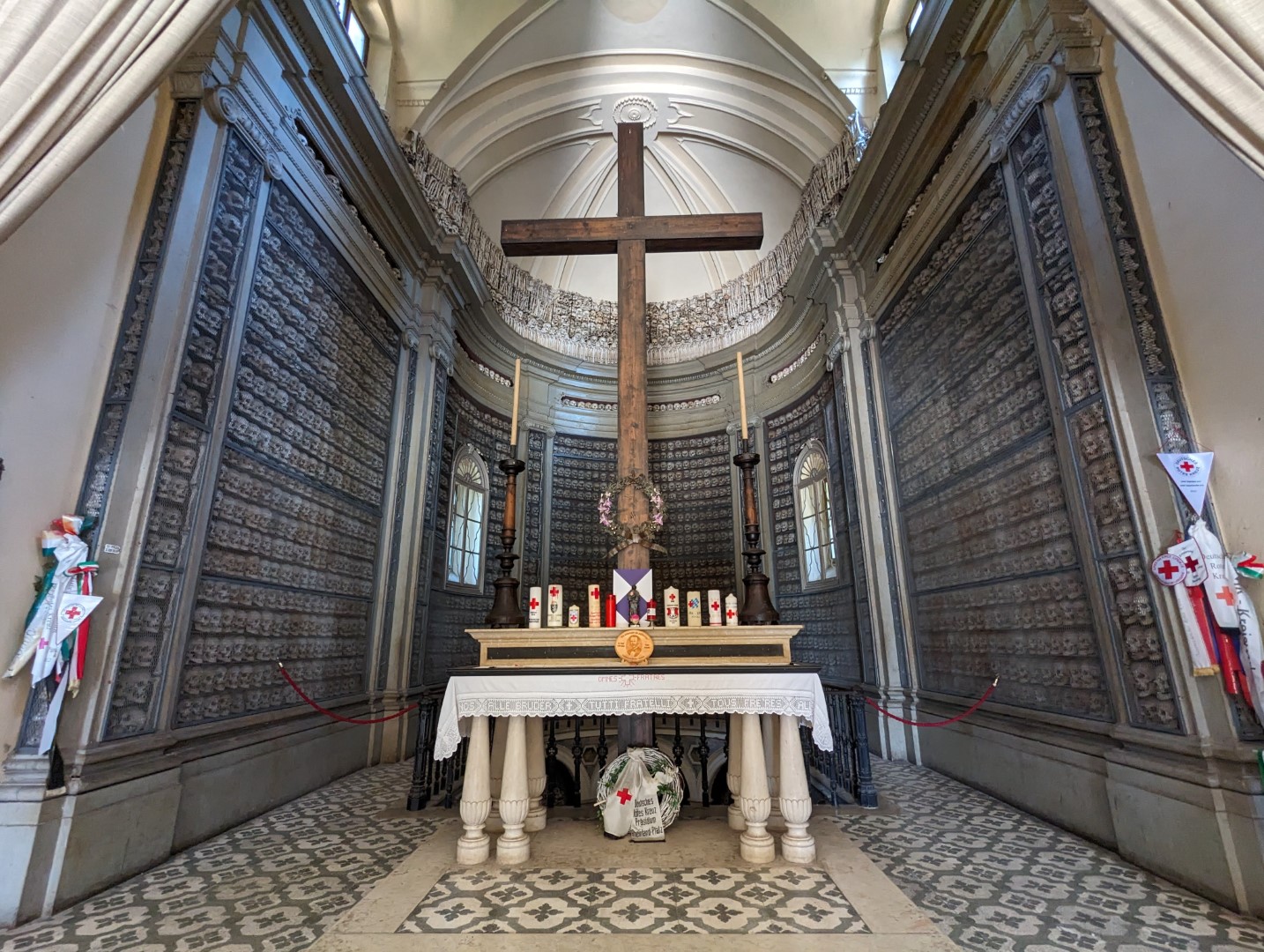
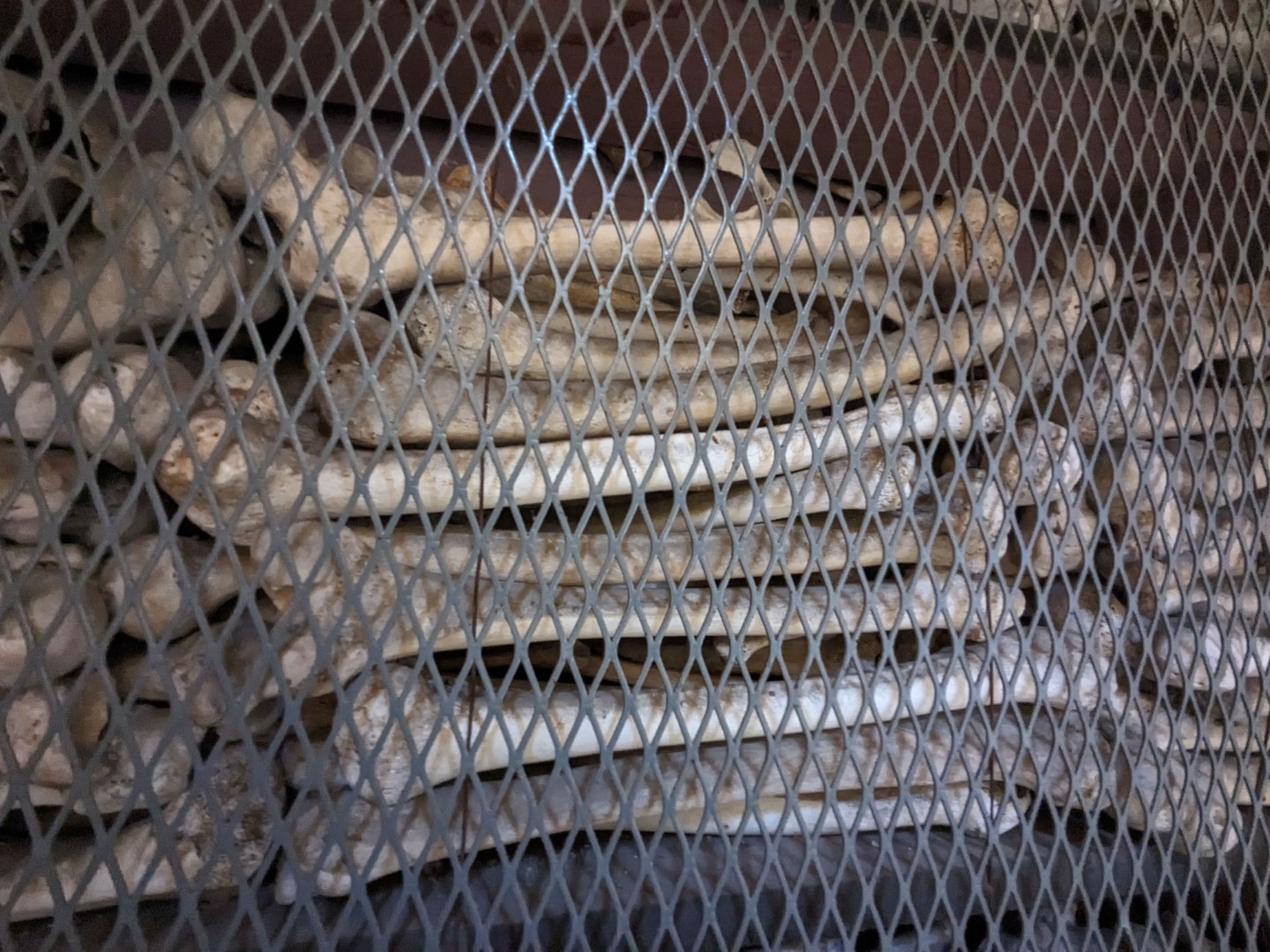
Inside, lies a grim reminder of the tragedy of war.
While the Catacombs of Paris which we visited a few weeks ago, housed the bones of thousands of Parisians sourced from many cemeteries across decades; all of the remains in this ossuary came from one single day of battle alone, fought on June 24, 1859.


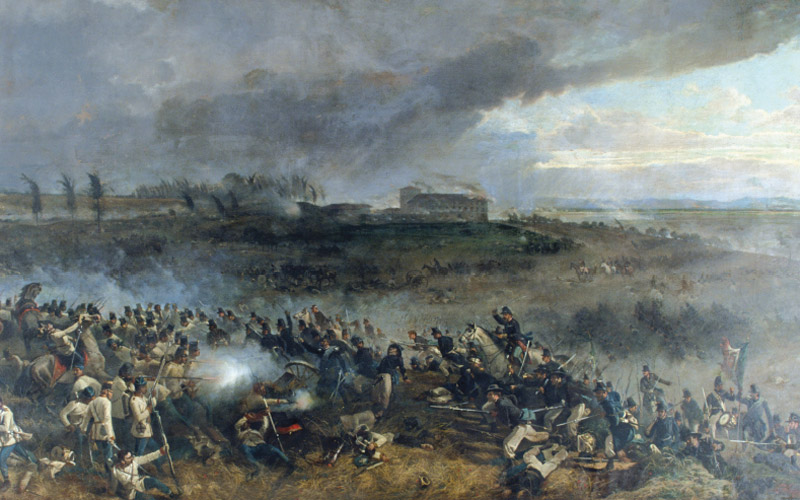
In the Second War of Italian Unification, Napoleon’s allied Franco-Sardinian army faced Franz Joseph’s Austrian army in Lombardy’s Solferino. 300,000 soldiers across both sides fought for 15 hours. Medical services were overwhelmed. The fight resulted in the victory of the allied French Army against the Austrian Army, and tens of thousands of men were killed in the Italian countryside and buried in mass graves.
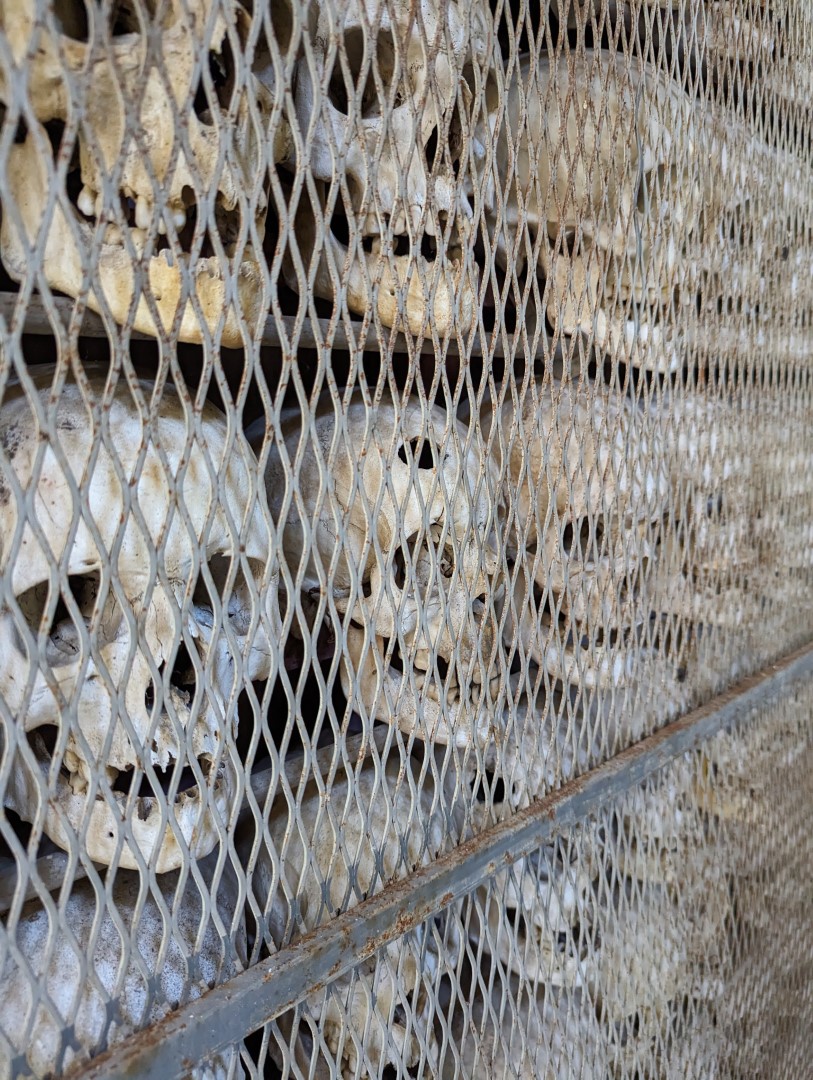
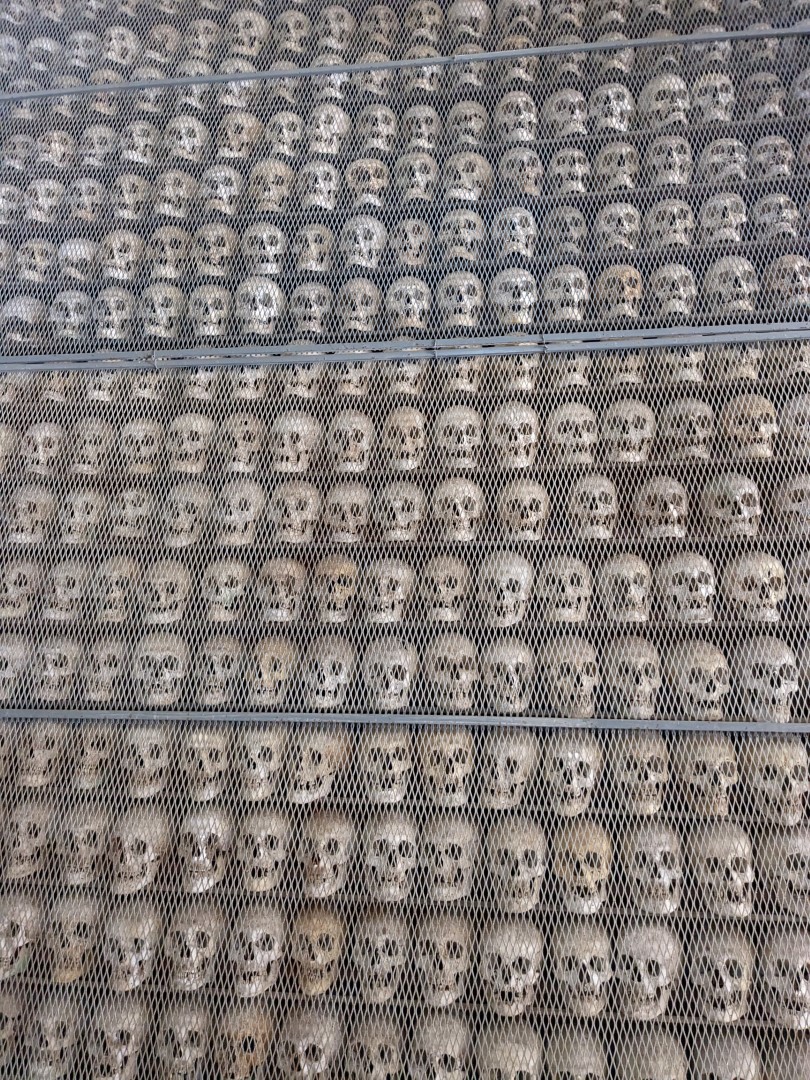
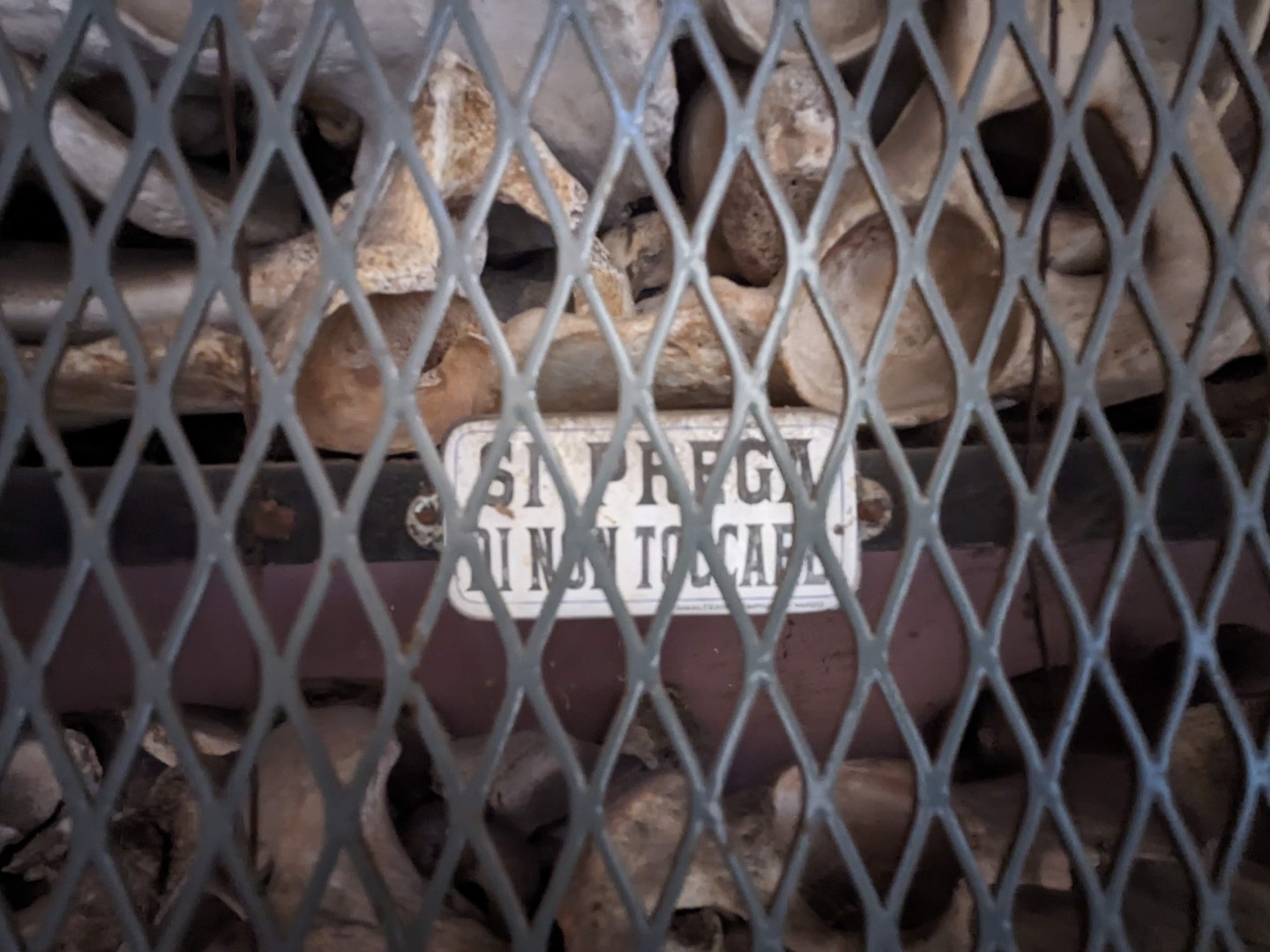
As a sign of respect for the fallen and as a reminder of the bloodshed, the ossuary was built, with skeletons exhumed, cleaned and carefully stacked in 1870 around a two story alter, offering a space for quiet reflection.

One positive outcome of the battle of Solferino, was the formation of the Red Cross. A Swiss banker who was travelling in the area at the time, Henri Dunant, assisted local women to treat soldiers from both sides injured in the battle. He wrote “On June 25 the sun illuminated one of the most horrific sights imaginable”. He was so affected by the experience, that he pushed for the formation of a medical service that would offer neural medical assistance during times of war. He helped to form the Red Cross, and at the Ossuary, wreaths and ribbons form red Cross services worldwide acknowledge the importance of the shrine, and of Henri’s contribution to the cause.
 The Token Traveller