If we were to believe headlines doing the rounds this European summer, Venice has been “ruined”, “destroyed” and “overrun” with tourists.
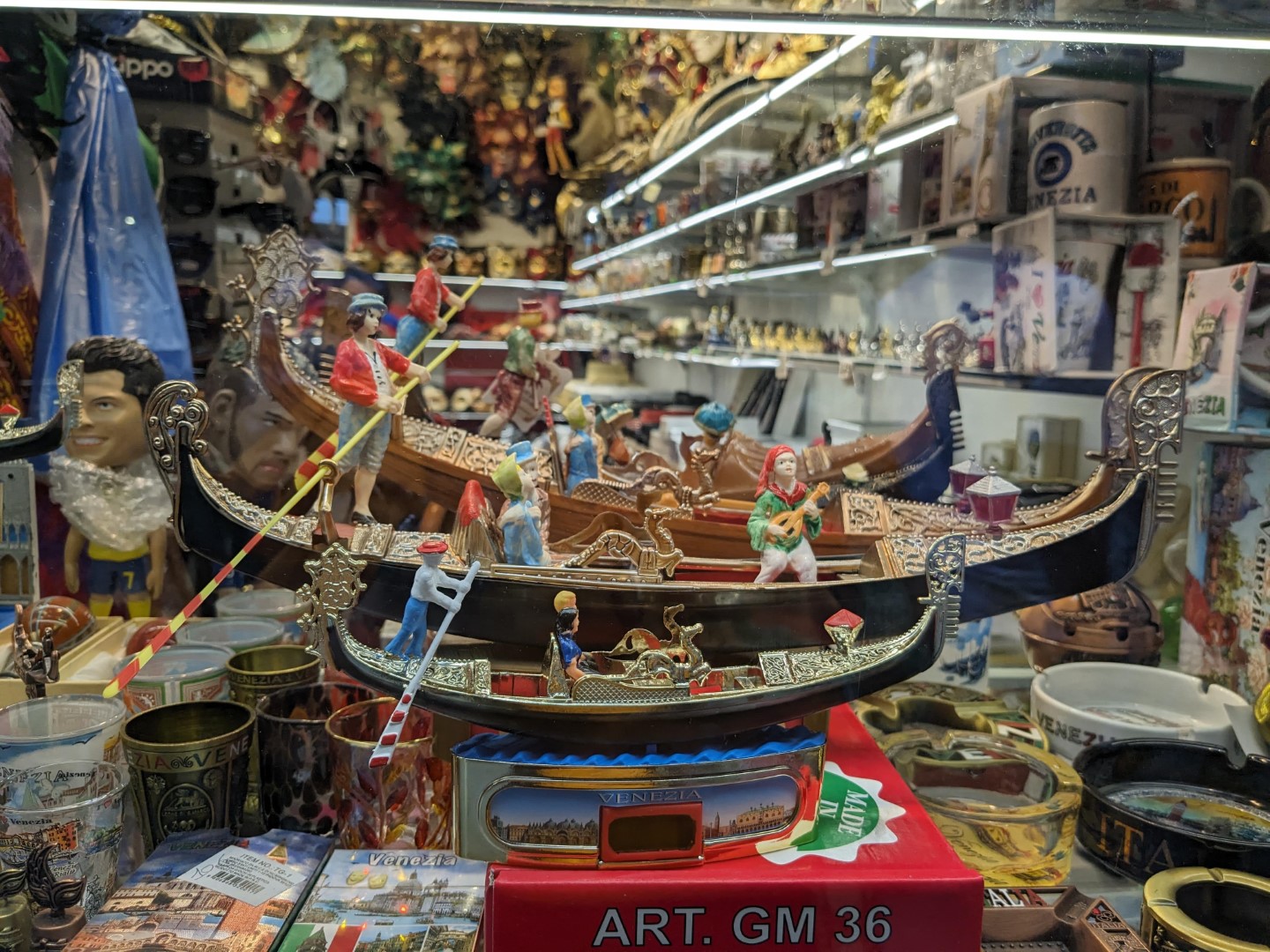
The world has been stuck at home for the past few years. Do you blame them for wanting to start exploring again? Yes, it seems like there are even more cheap souvenir stalls, more shops filled with Chinese knock offs and “Made in Italy” leather that has clearly been pumped out of a sweat shop that happens to be on Italian soil in Venice this time, and that tourists are swarming each like seagulls on a chip (Aus reference there).
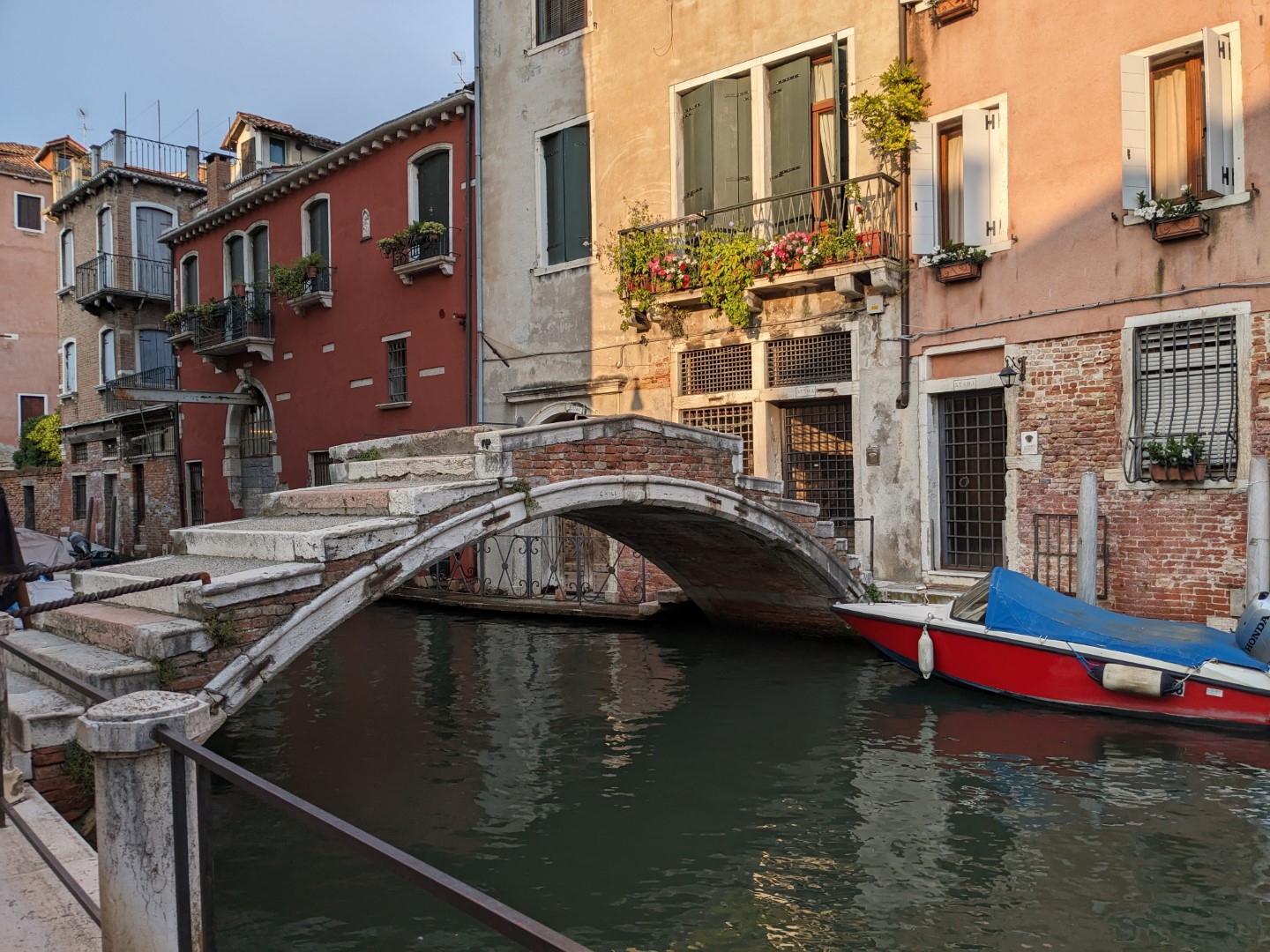
But the romantic allure, delicious intrigue, and crumbling remains of wealth and power still beguile me.
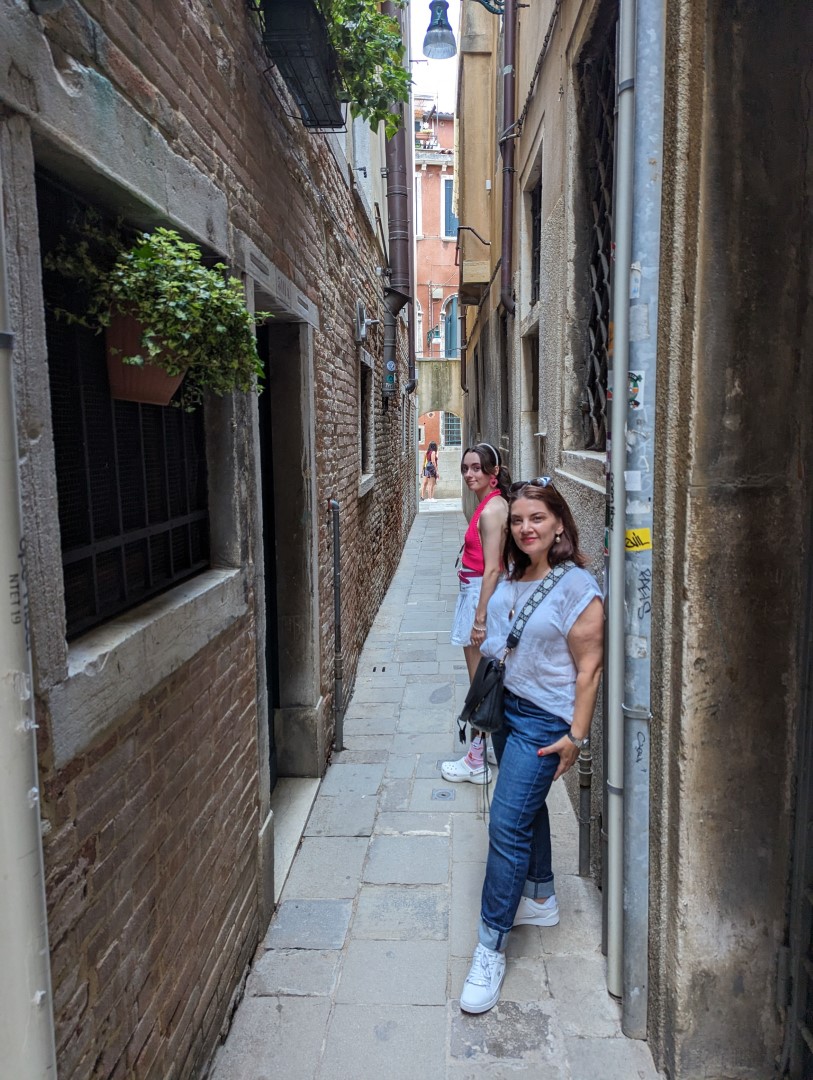

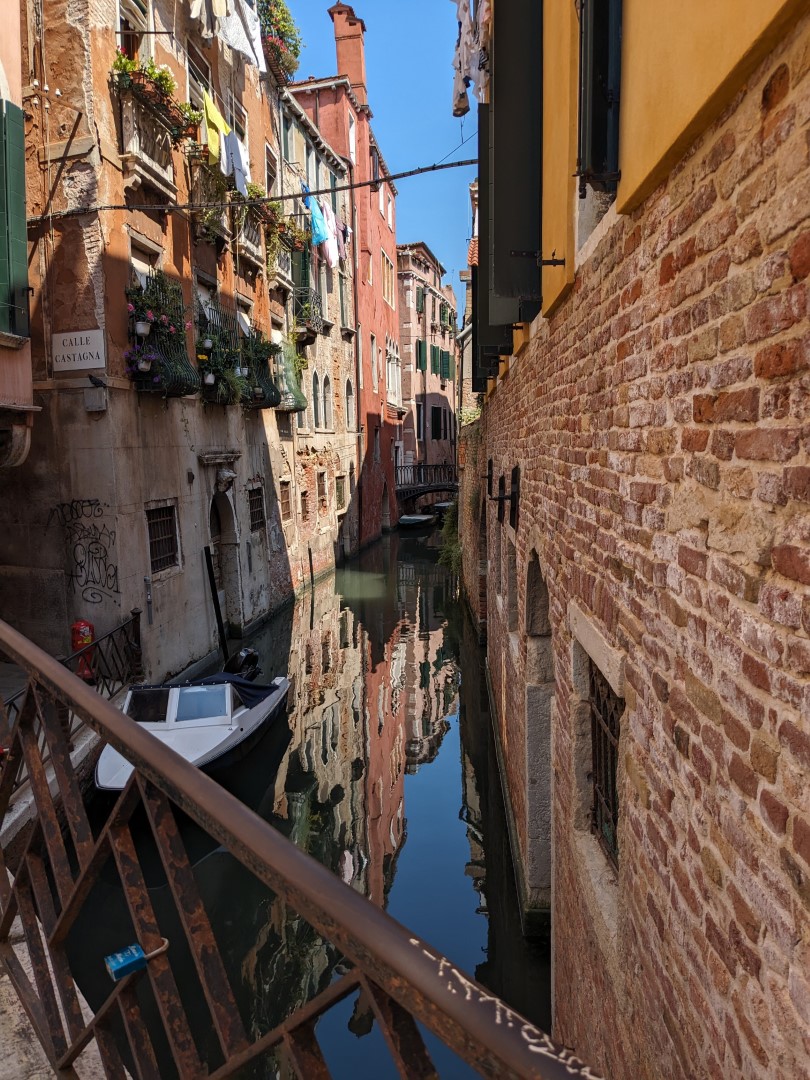
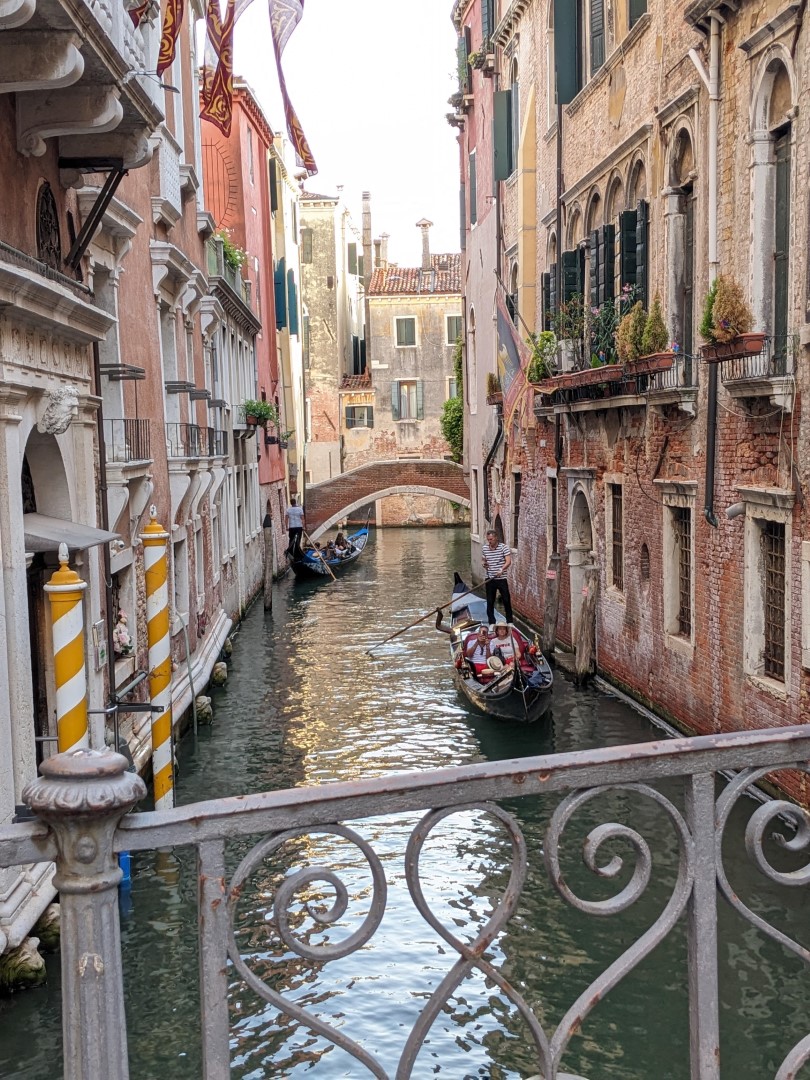
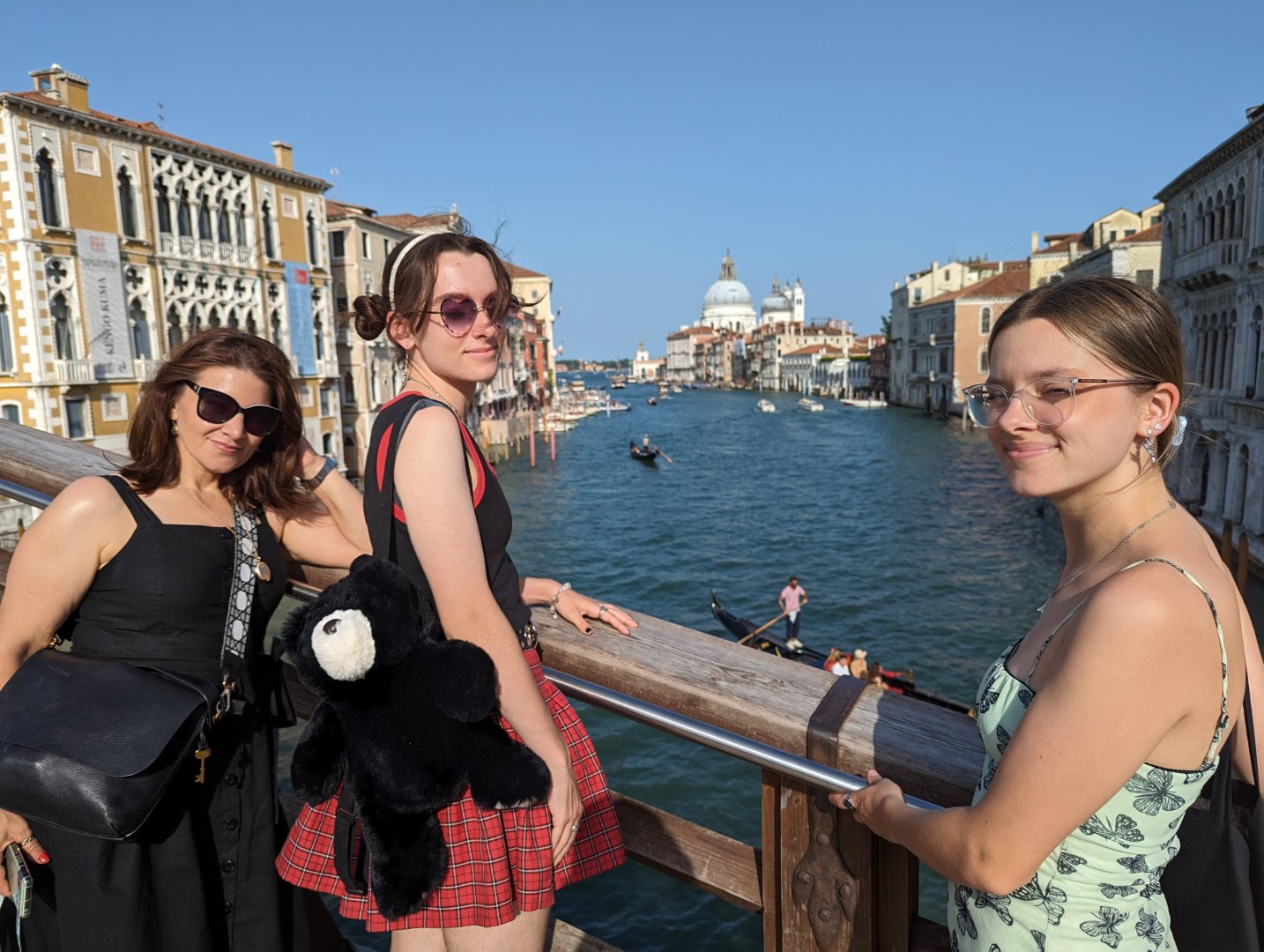
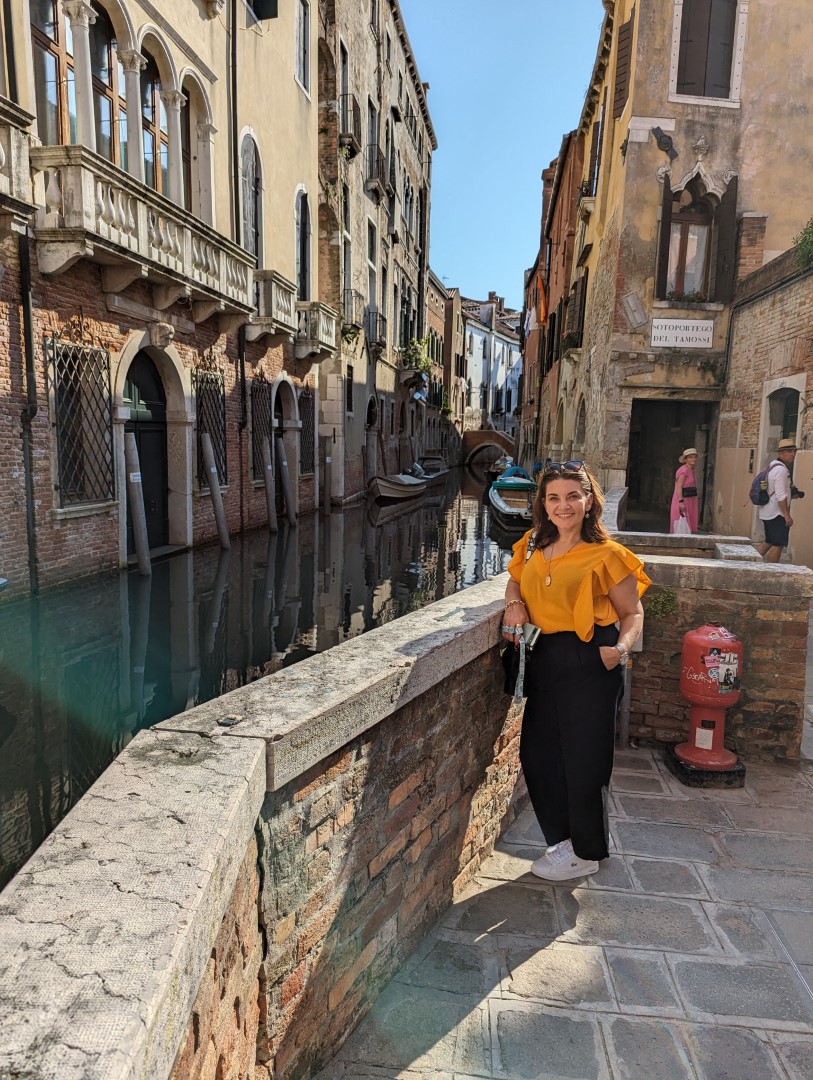
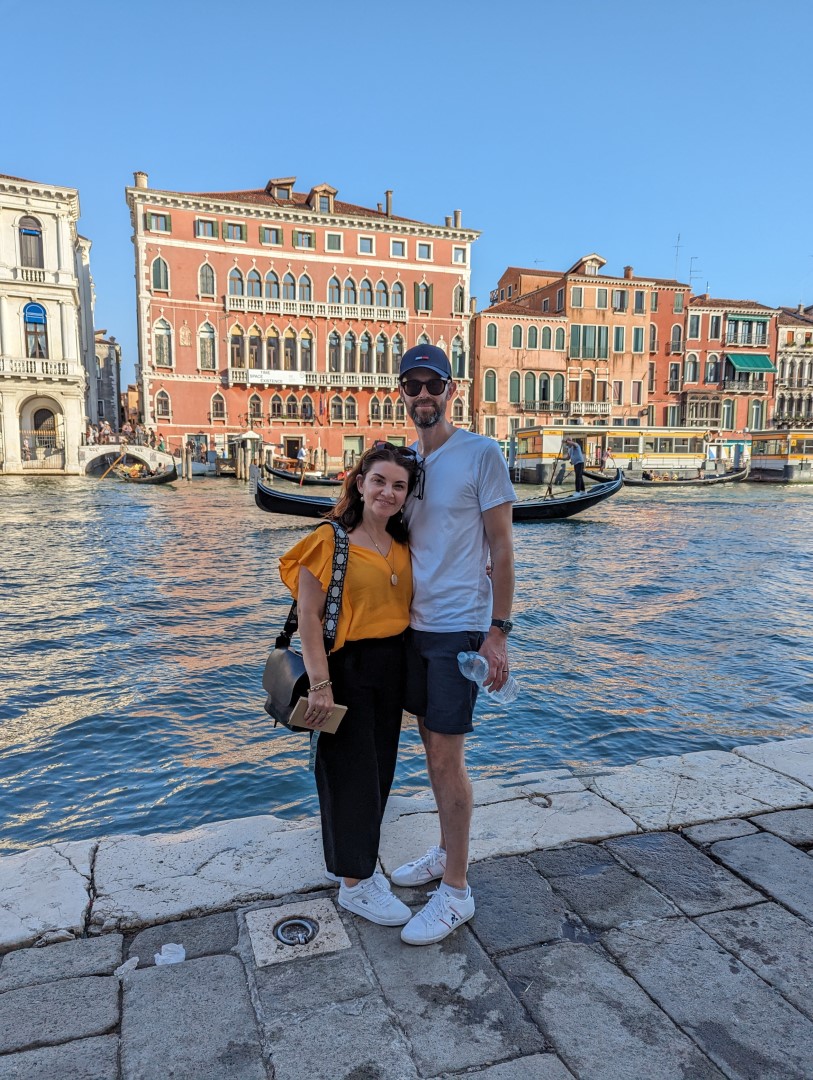
I’ve written about my love for Venice on numerous occasions. My feelings haven’t changed. Every visit uncovers a new secret. A new discovery. A new bridge or alleyway.
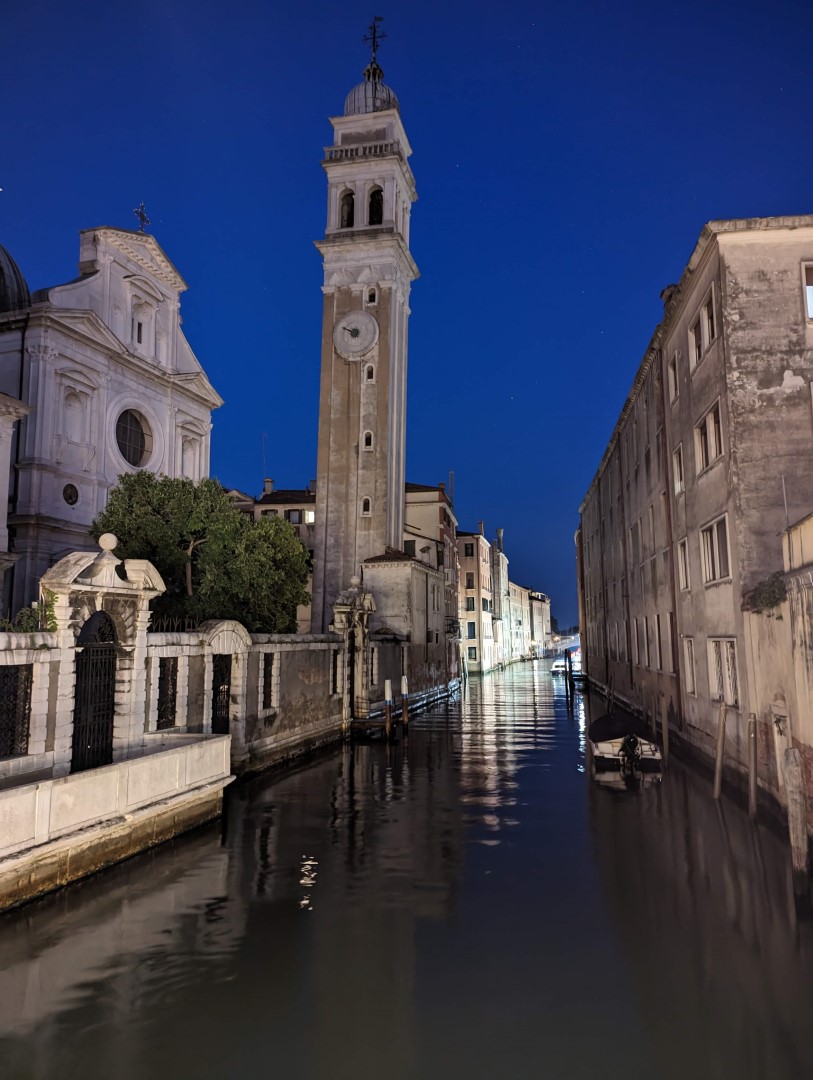
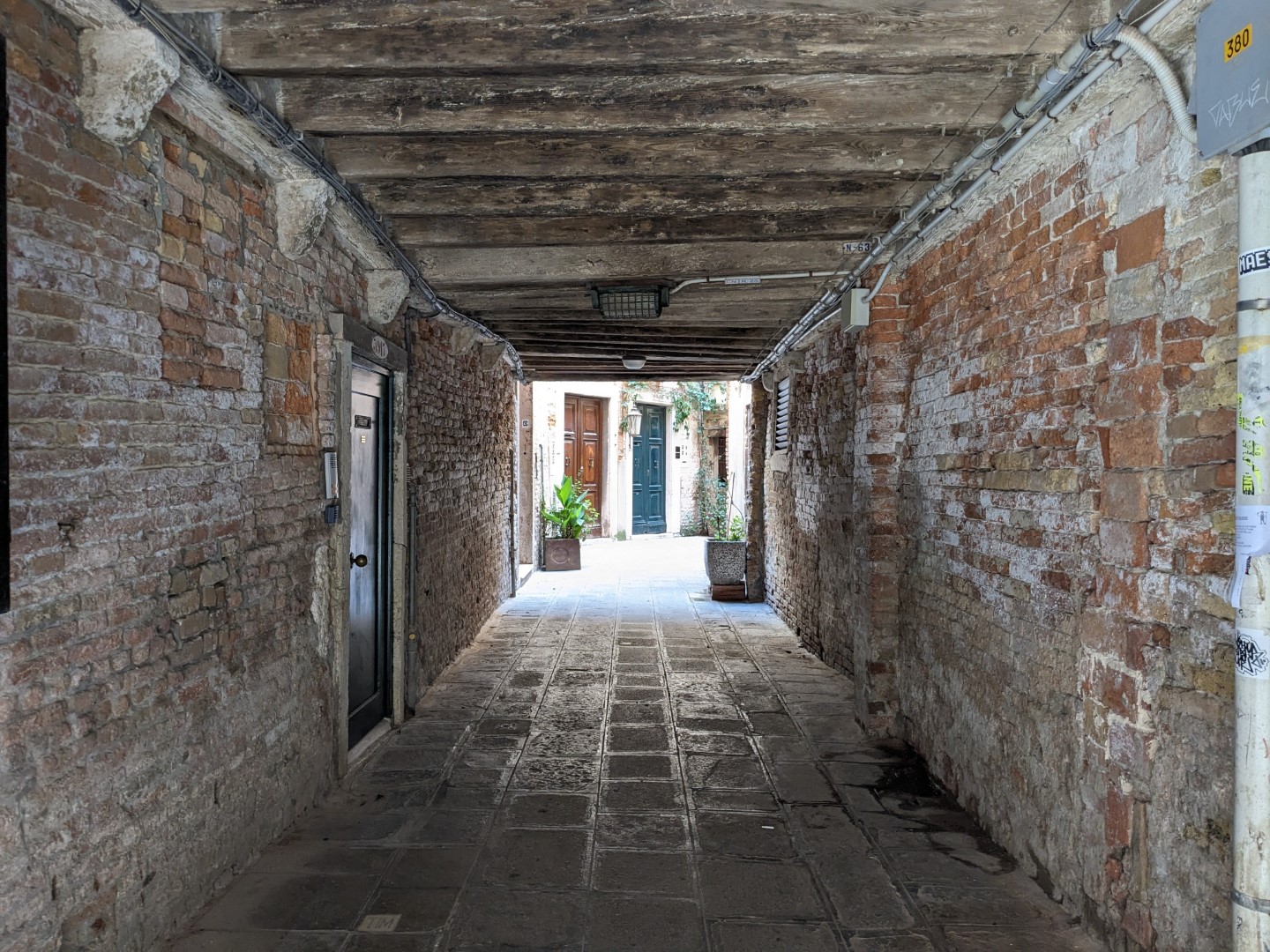
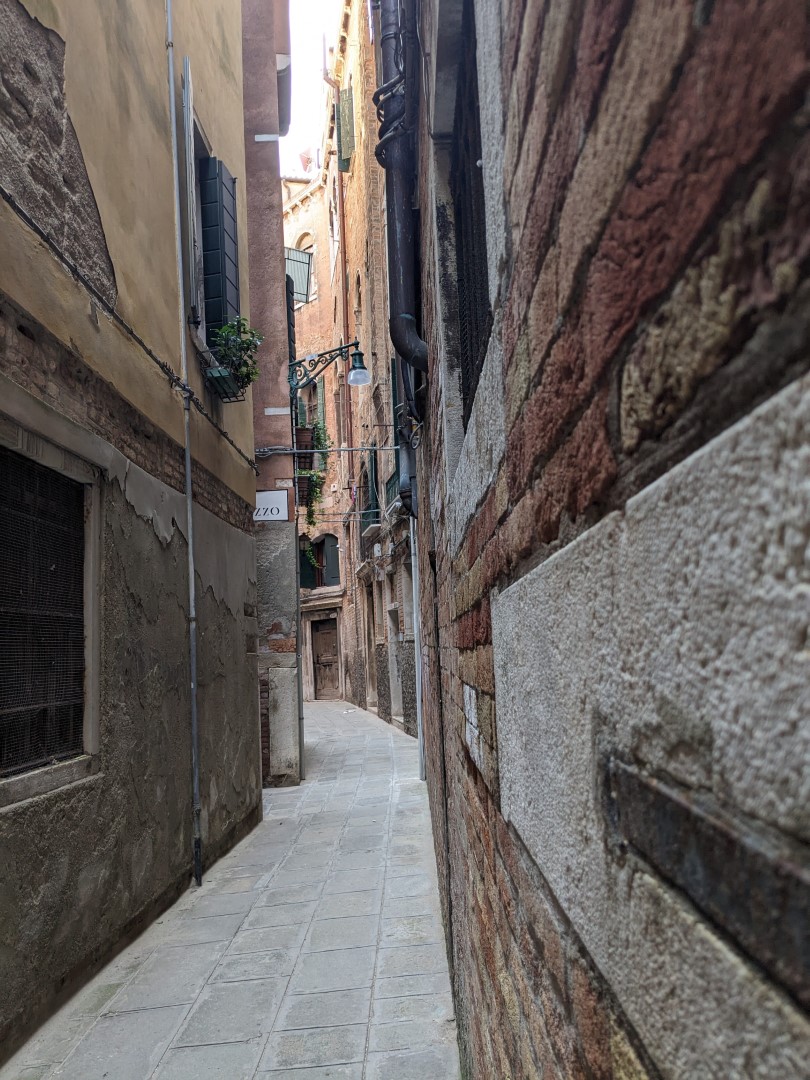
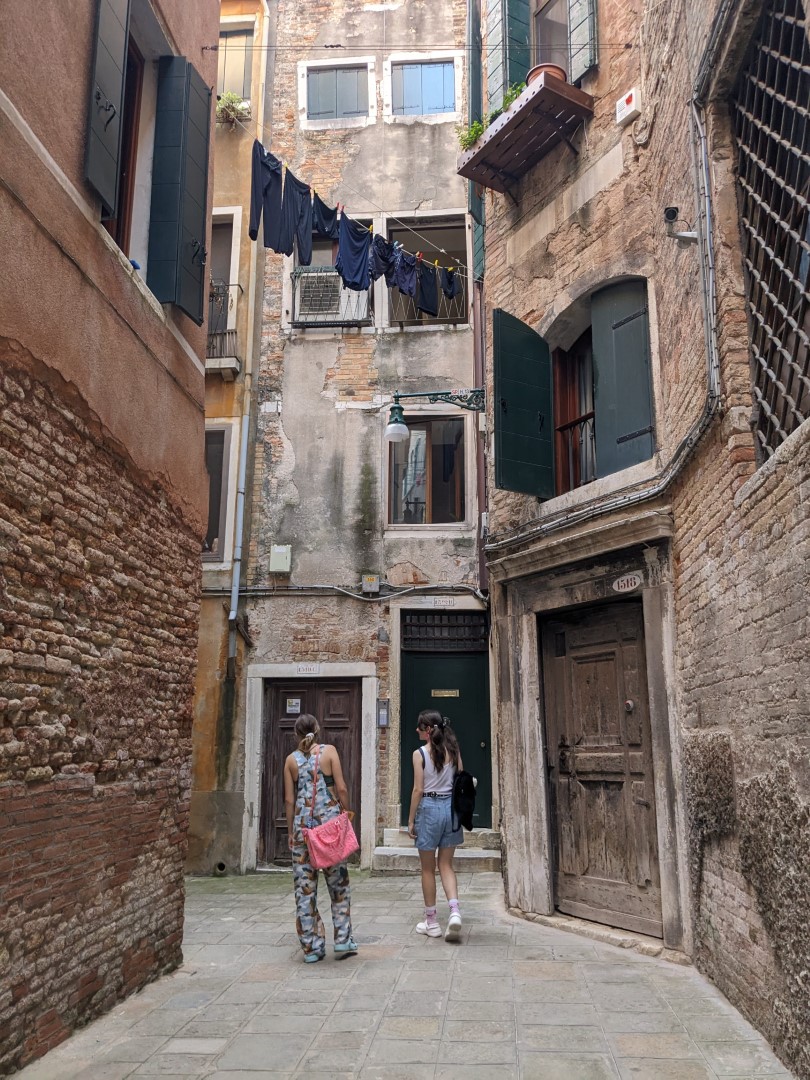
I do find it peculiar that most tourists follow each other, sheep-like, through the main thoroughfares between the station, St. Mark’s square, and the Rialto bridge, without veering off the well-trodden track. Venice is compact, but you can easily find empty areas to catch your breath. Staying late is key. Have a sleep-in to allow the boomers space to trudge around taking photos haphazardly on their iPads. Let them fight over seats for overpriced coffees in St. Mark’s while you grab one for 2 euros elsewhere. Cruise through more out-of-the-way churches or trattorie during the day and wait for the still and cool of the evening to walk the main roads.


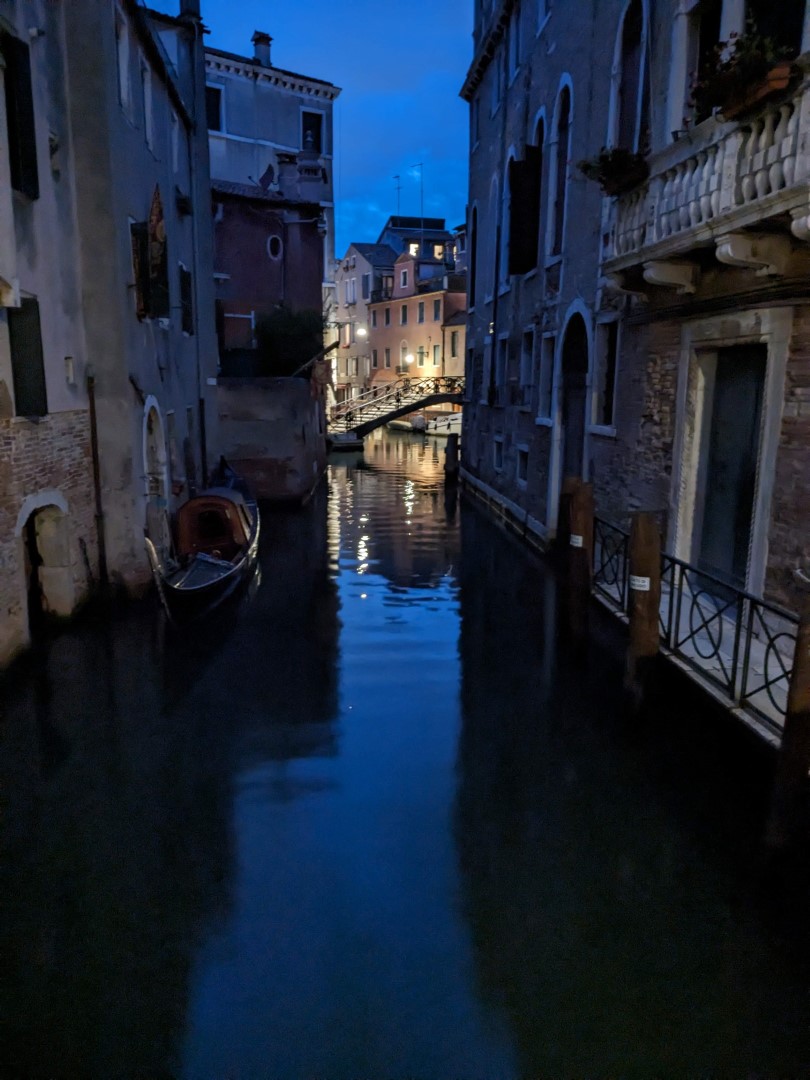
Auguri Milana!
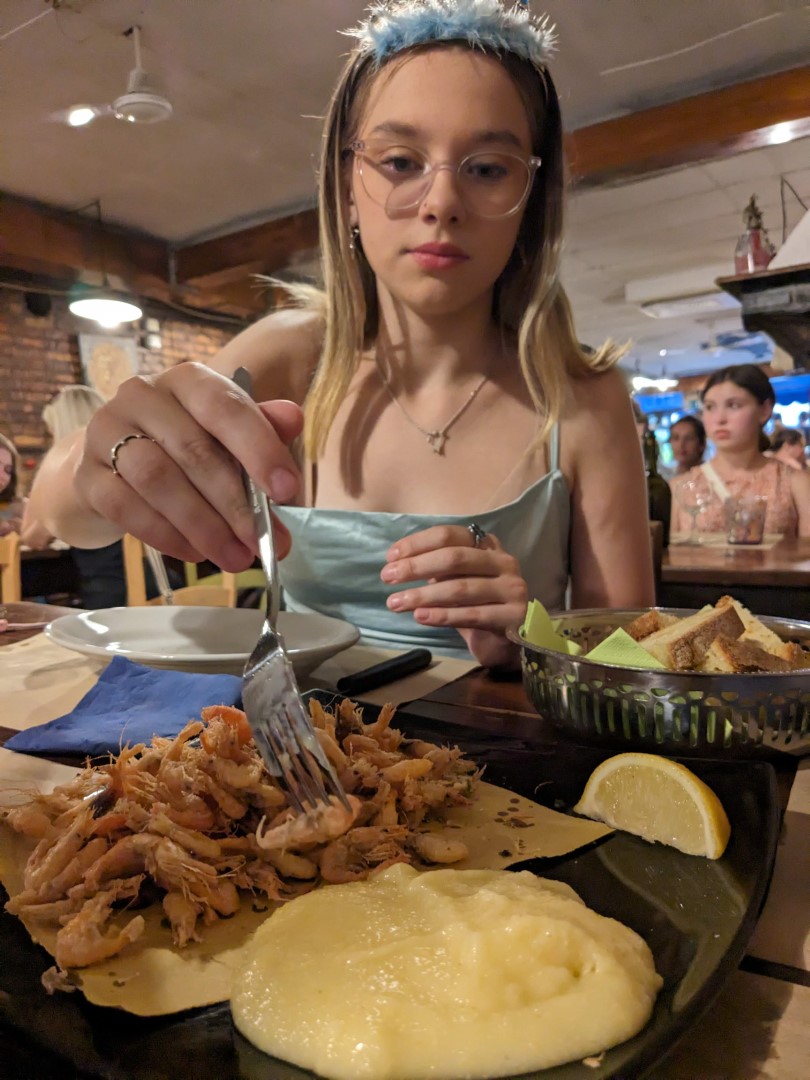
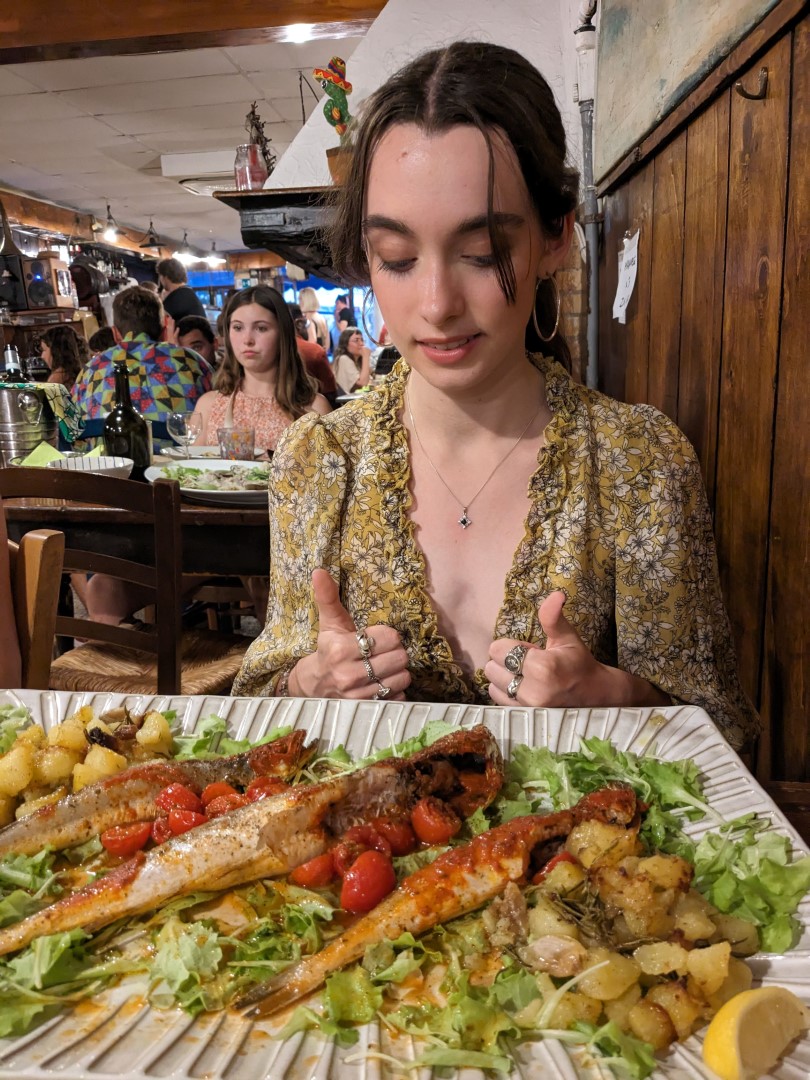
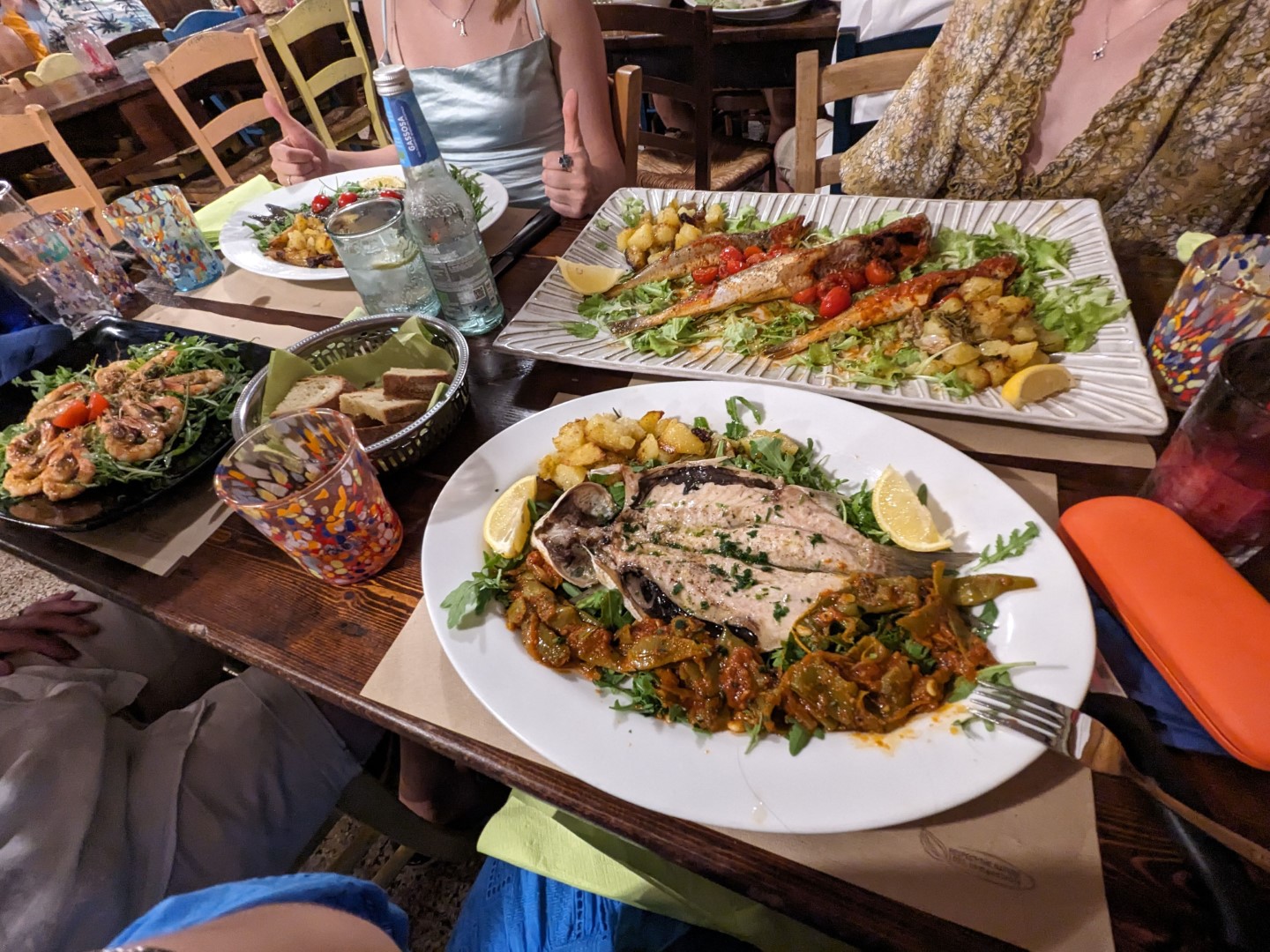
With Milana celebrating her 17th birthday, we booked into “Paradiso Perduto”, the same Venetian seafood restaurant we visited for Cam’s 40th a few years back. The wild band was no longer there, nor was the restaurant cat.
We were still served enormous platters of local favourites; fresh lagoon fish, prawns, and traditional “sarde in saor” (sweet and sour sardines), delivered by a salty “sarde in saor” waiter with sweet eyes, and a sour attitude.



Palazzo Ducale
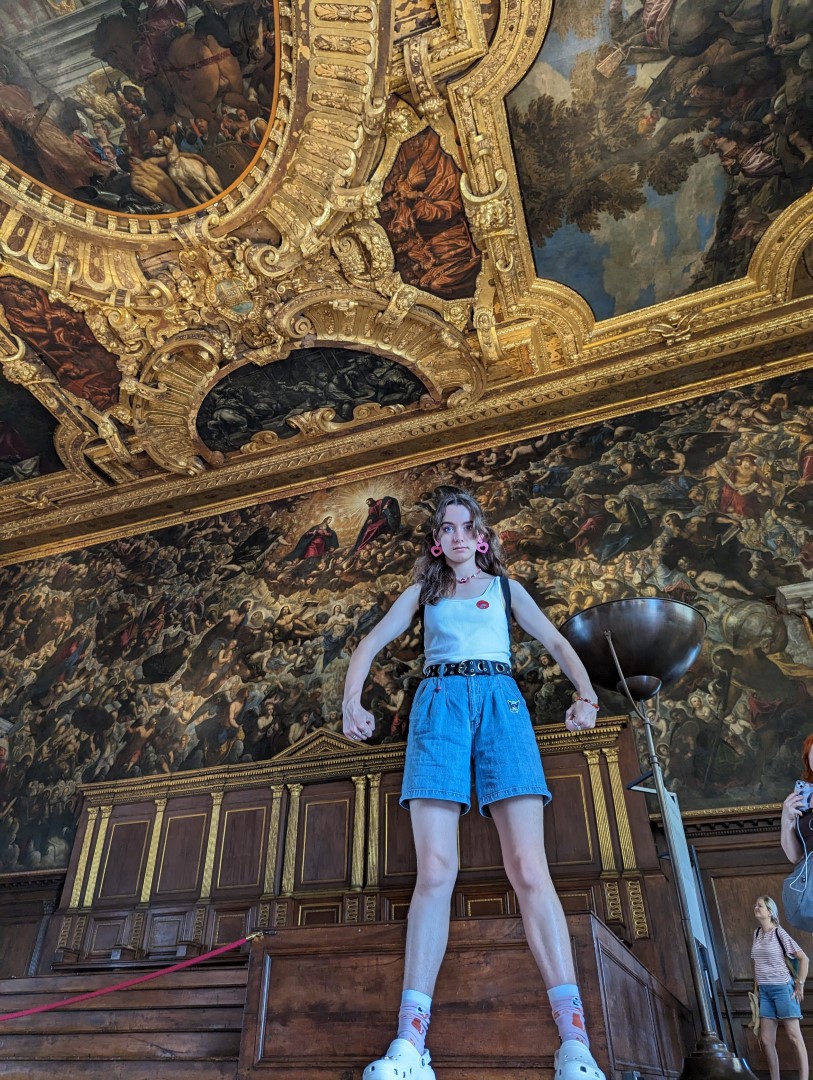
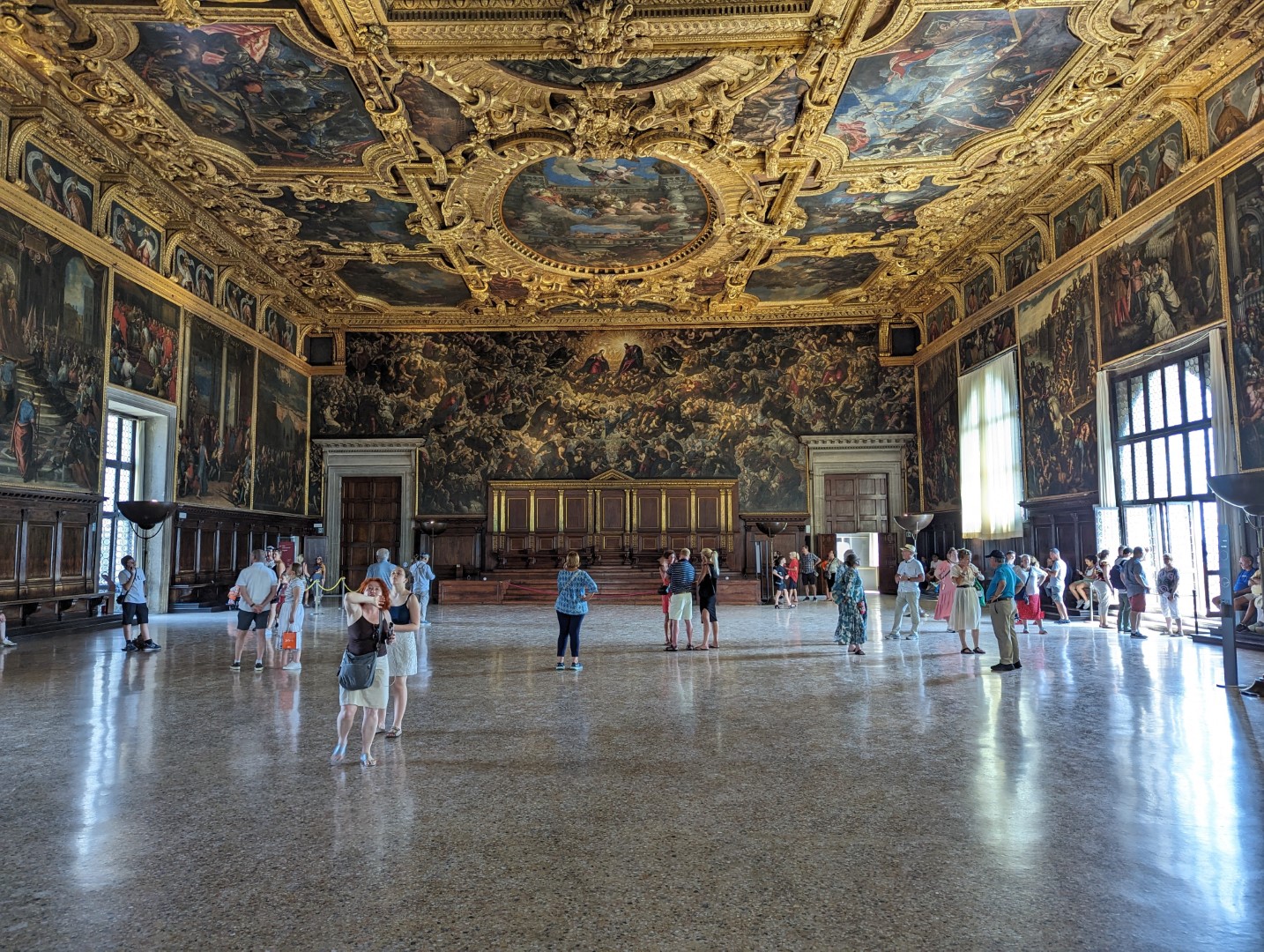
The Doge’s Palace was government, the house of justice, and the home of the doge (or duke) the highest official of the Venetian republic. Doges were chosen from Venice’s most noble families. They held the position for life and were the Venetian Republic’s chief magistrate and leader…until Napoleon conquered northern Italy in 1797.
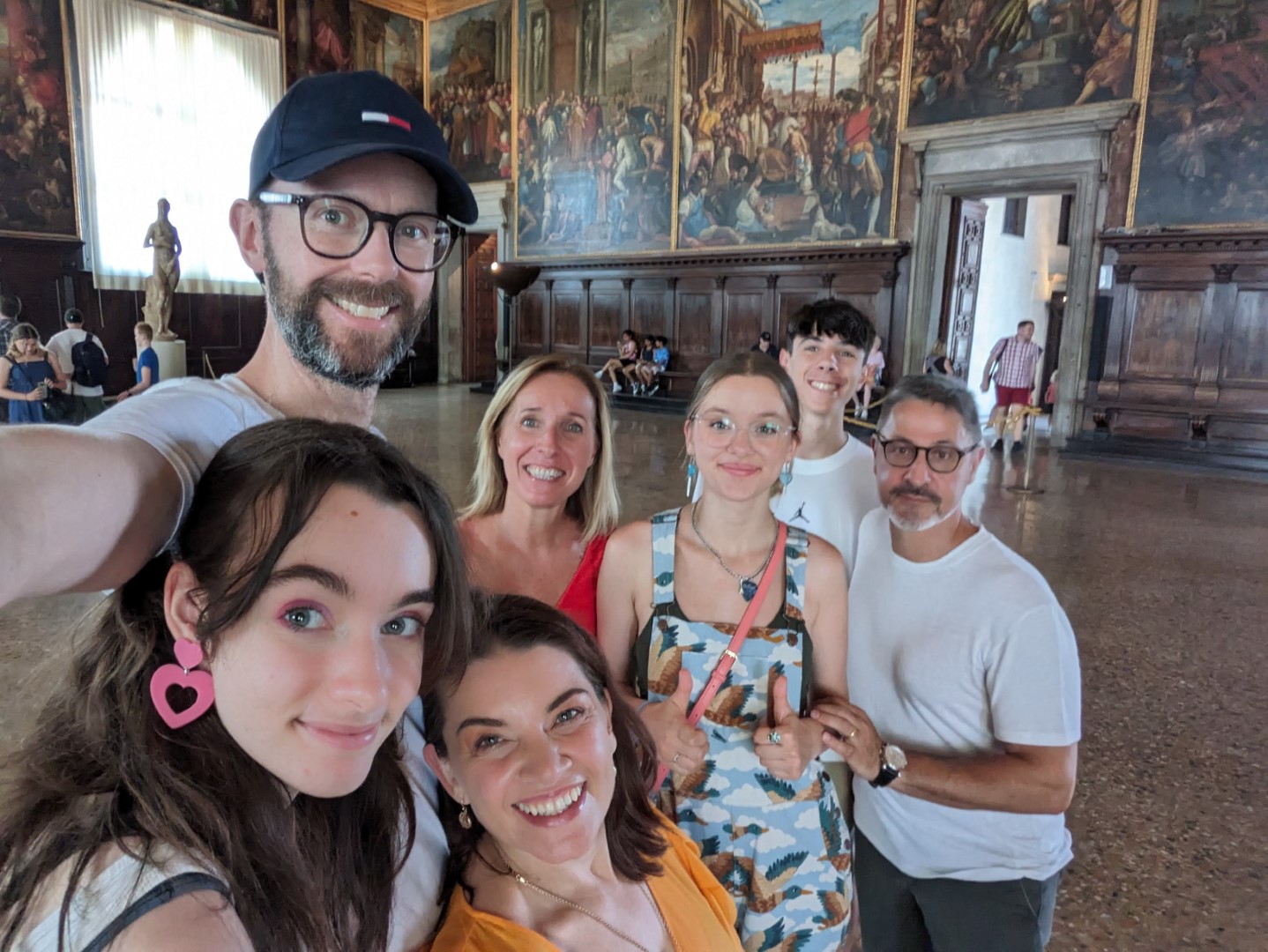
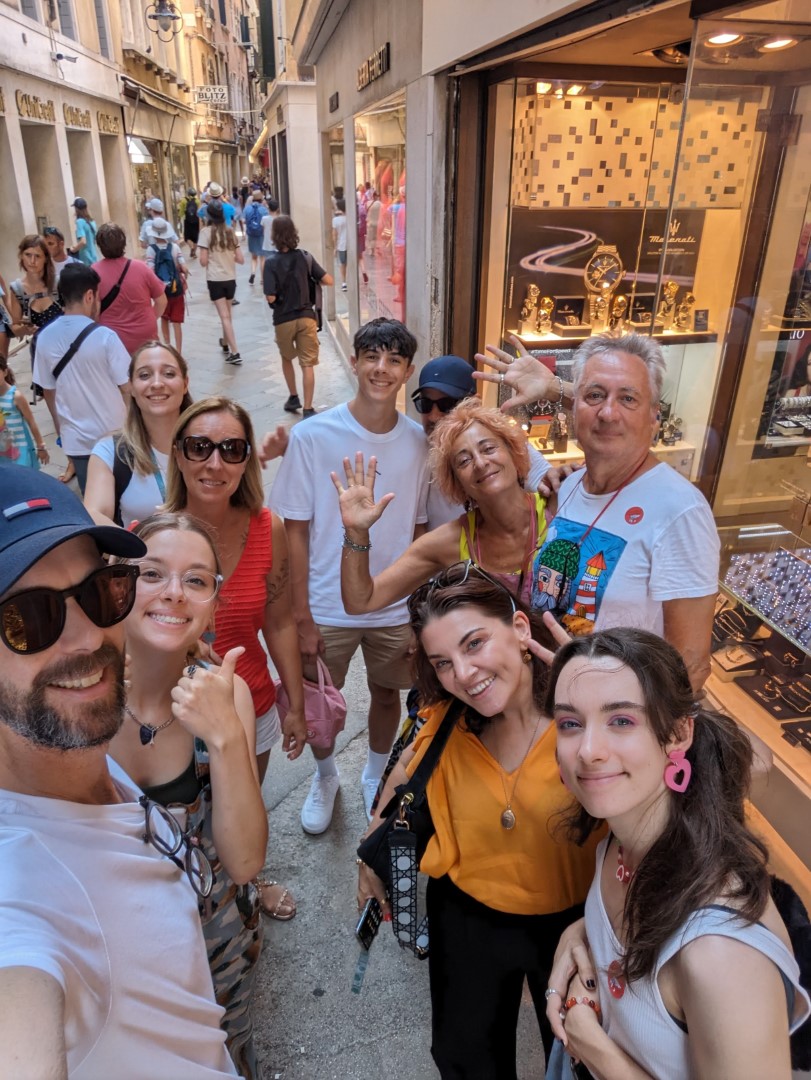
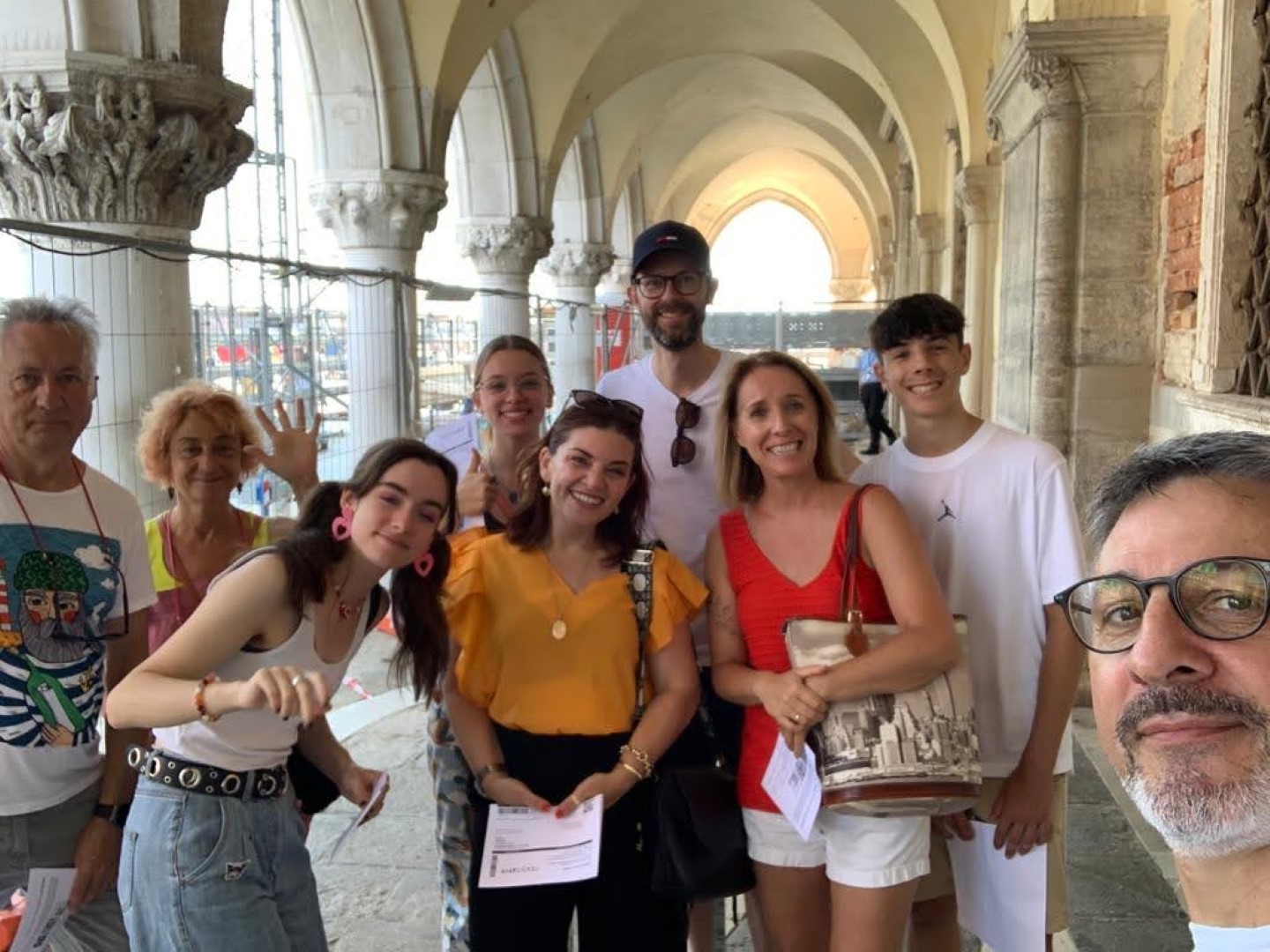
This is about the extent of my Googled knowledge. We took a brilliant (but sweaty…how did they cope in Venice pre-aircon?) “Secret Itineraries” tour with a superb guide Aurora. She also happens to be my cousin, and her parents Giovanni and Mara (seeing her in action for the first time), her brother Niccolo, and my other Italian cousins Laura and Michele joined us.
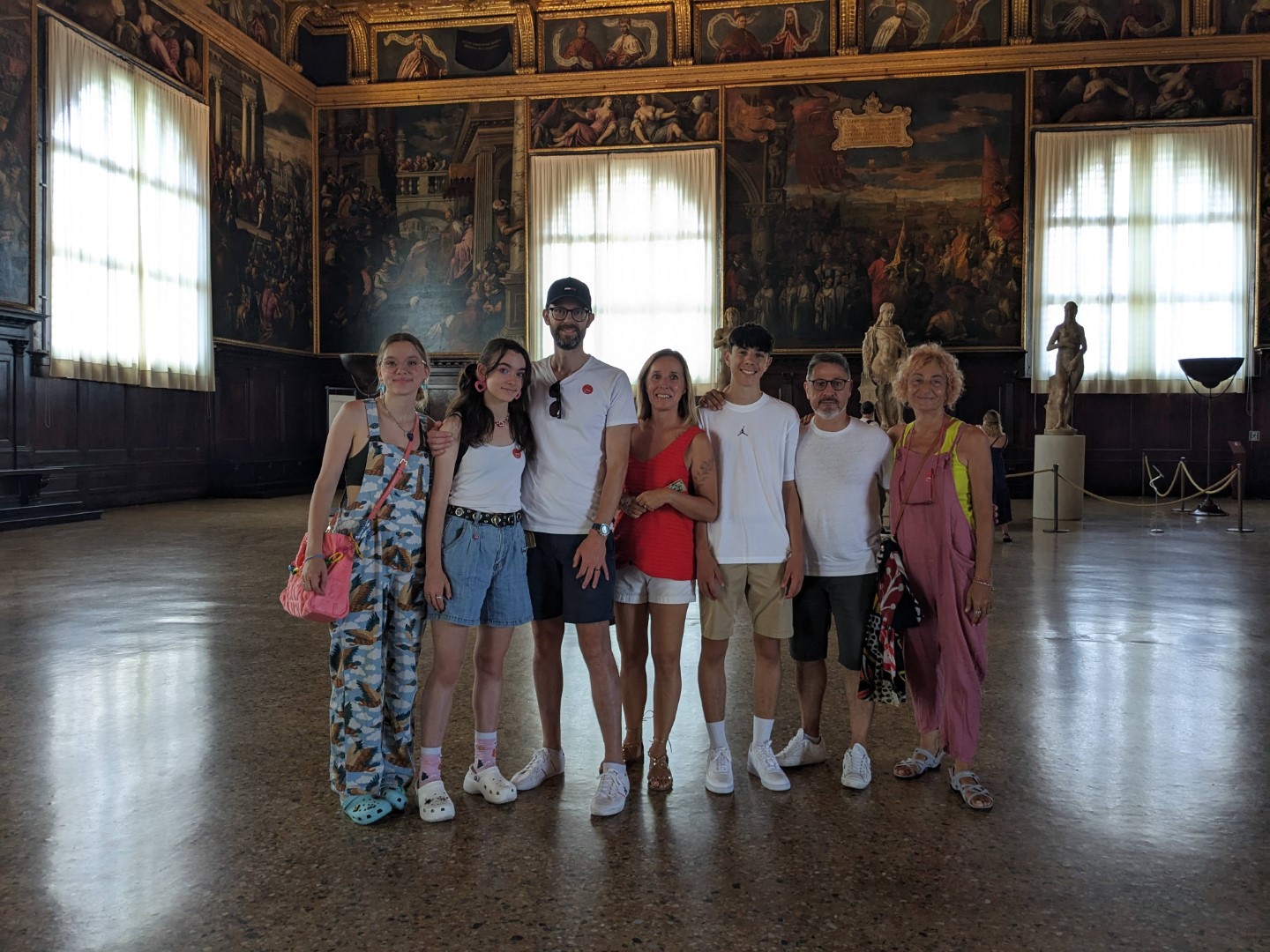

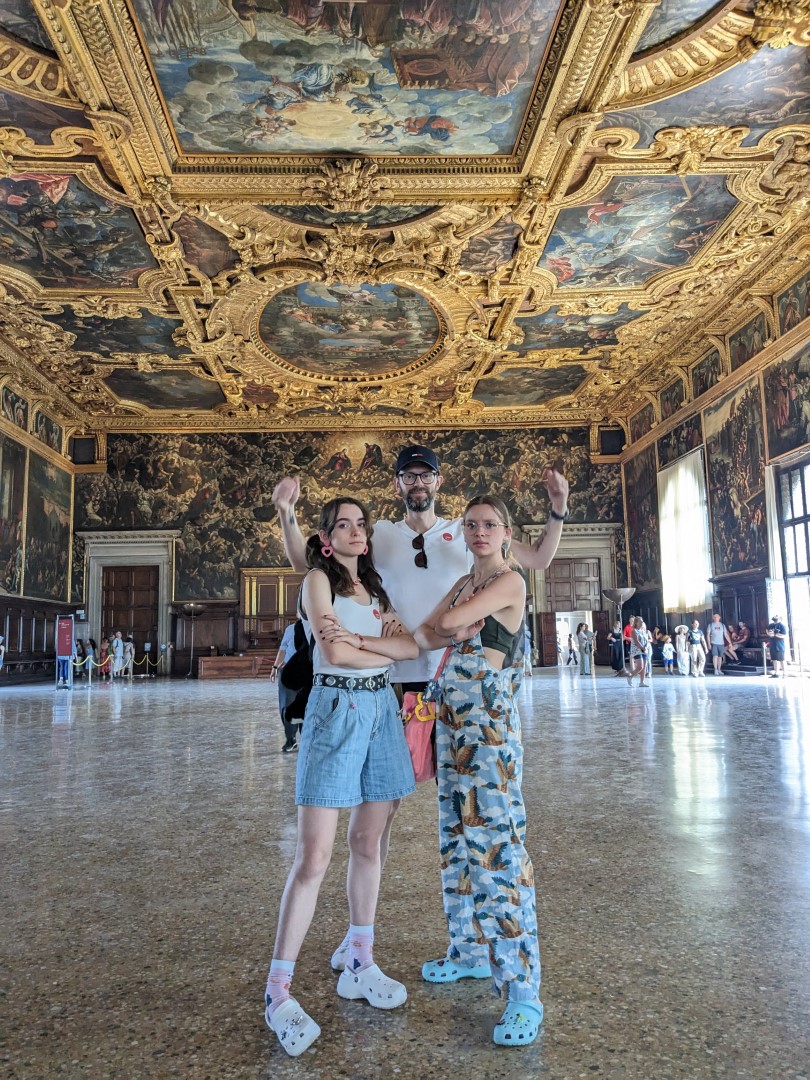

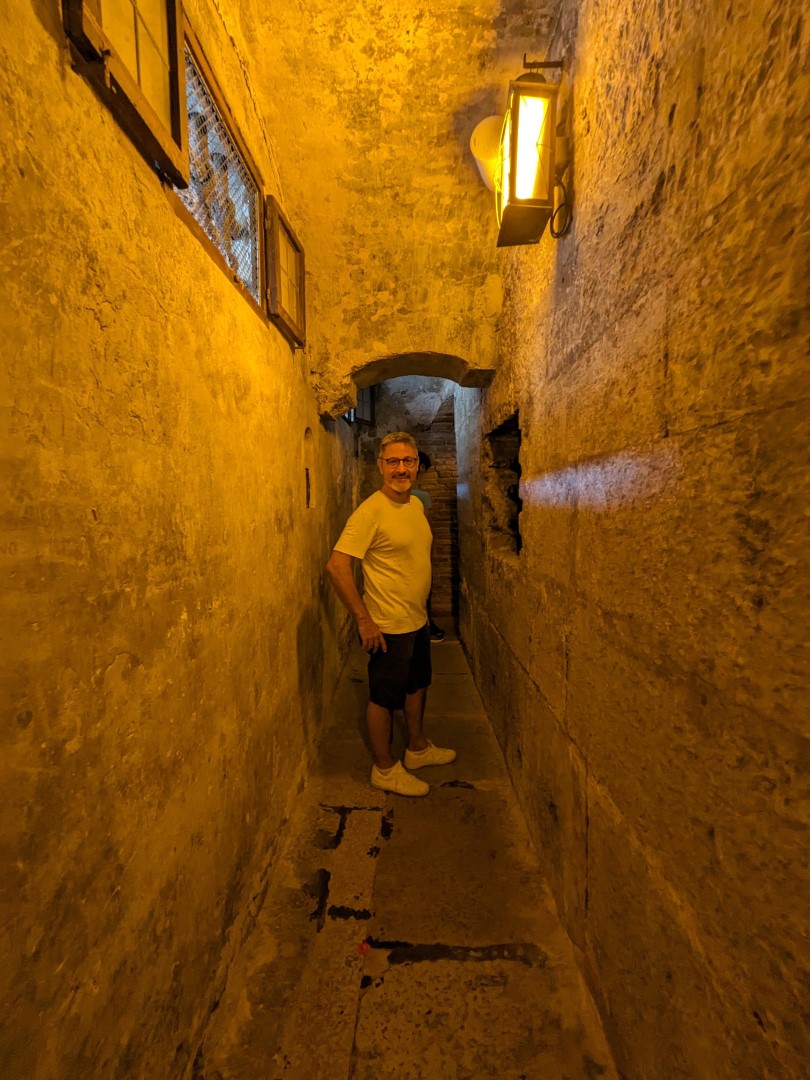


Aurora took us behind the scenes of the palace, through the maritime-inspired timber offices, the Inquisitor’s room, the prisons and torture chambers. Venice’s celebrated writer/lover/criminal/cad Casanova was the only one to ever escape the palace’s cells, and his story was woven throughout her tour.
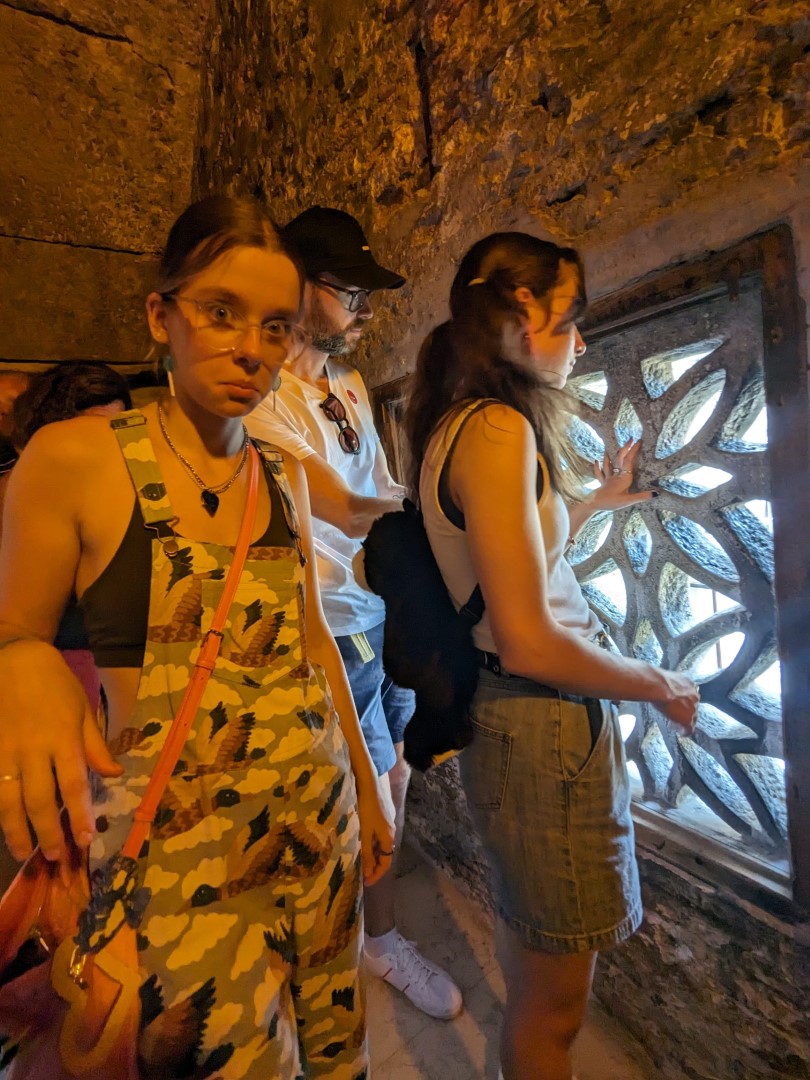

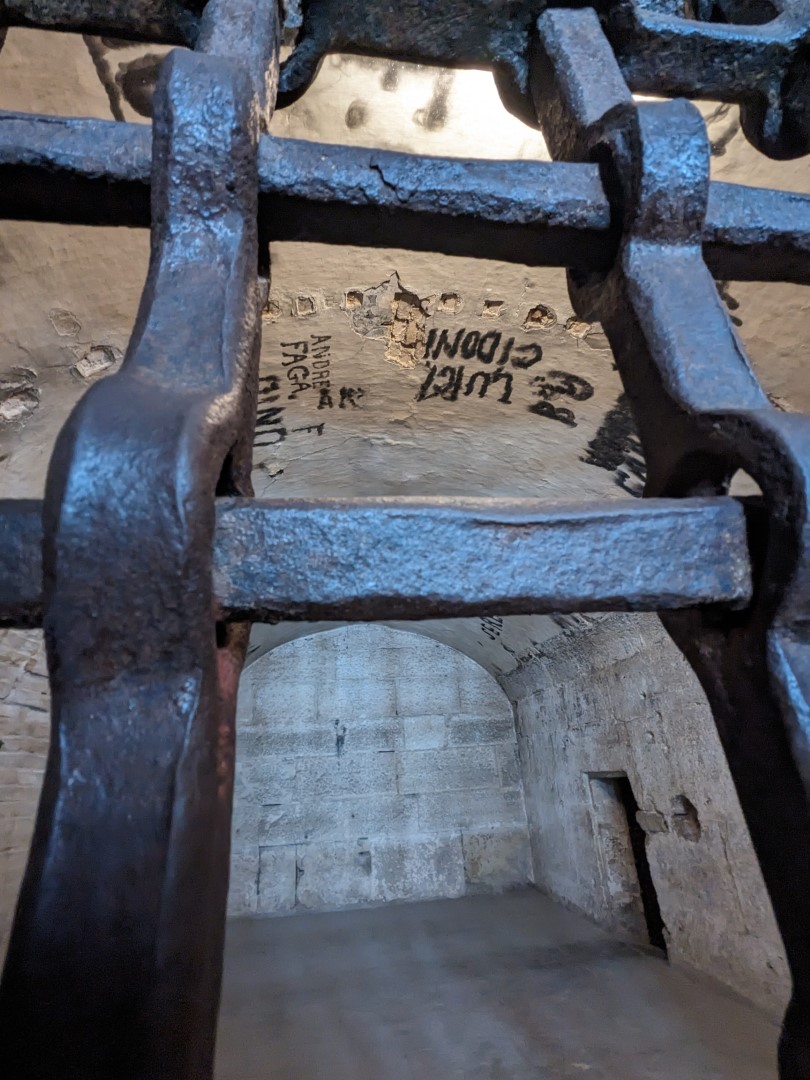
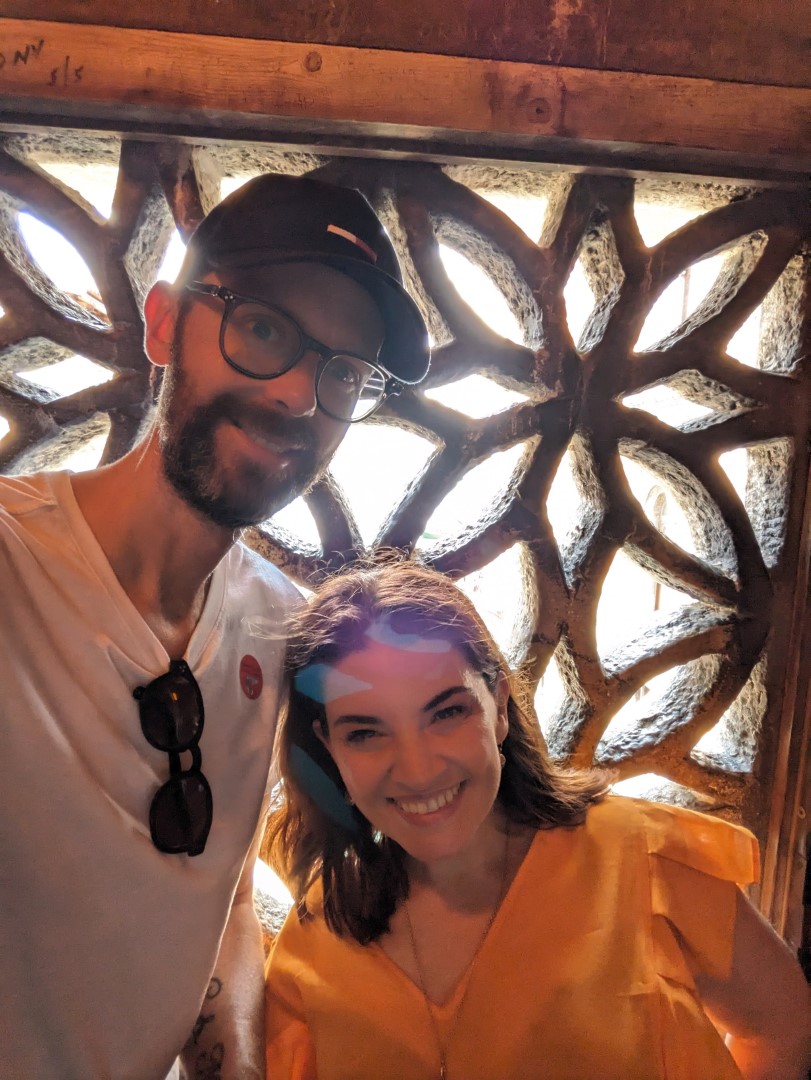
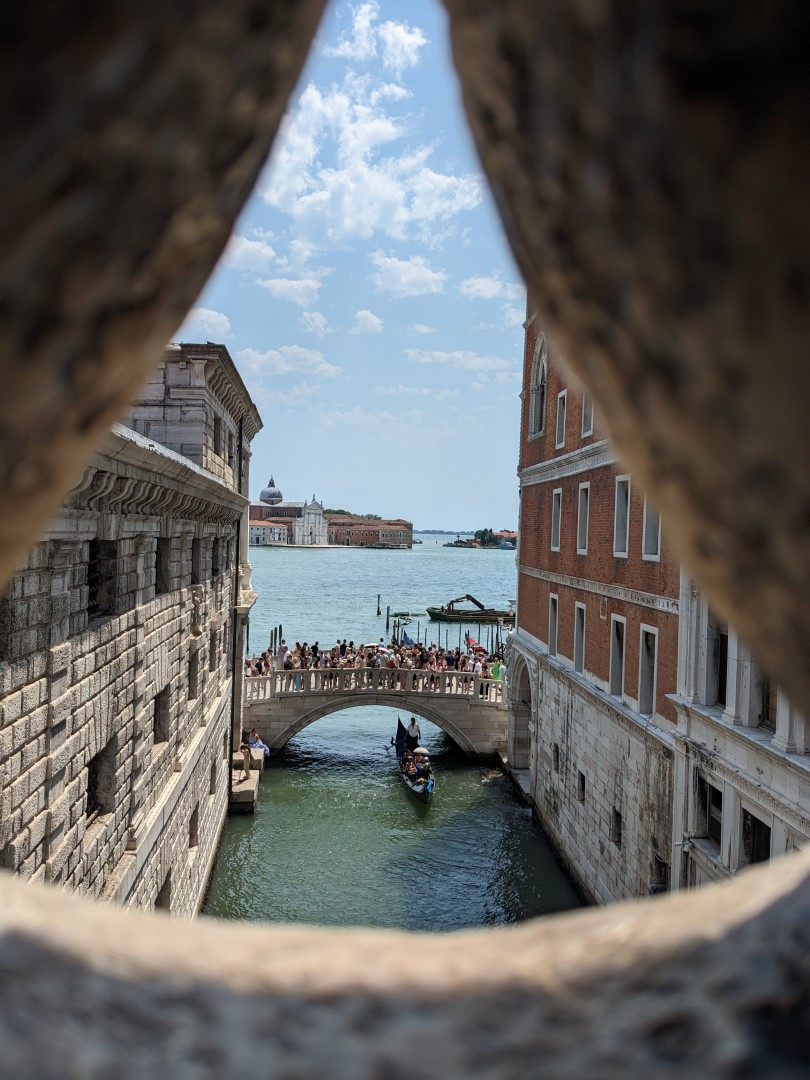
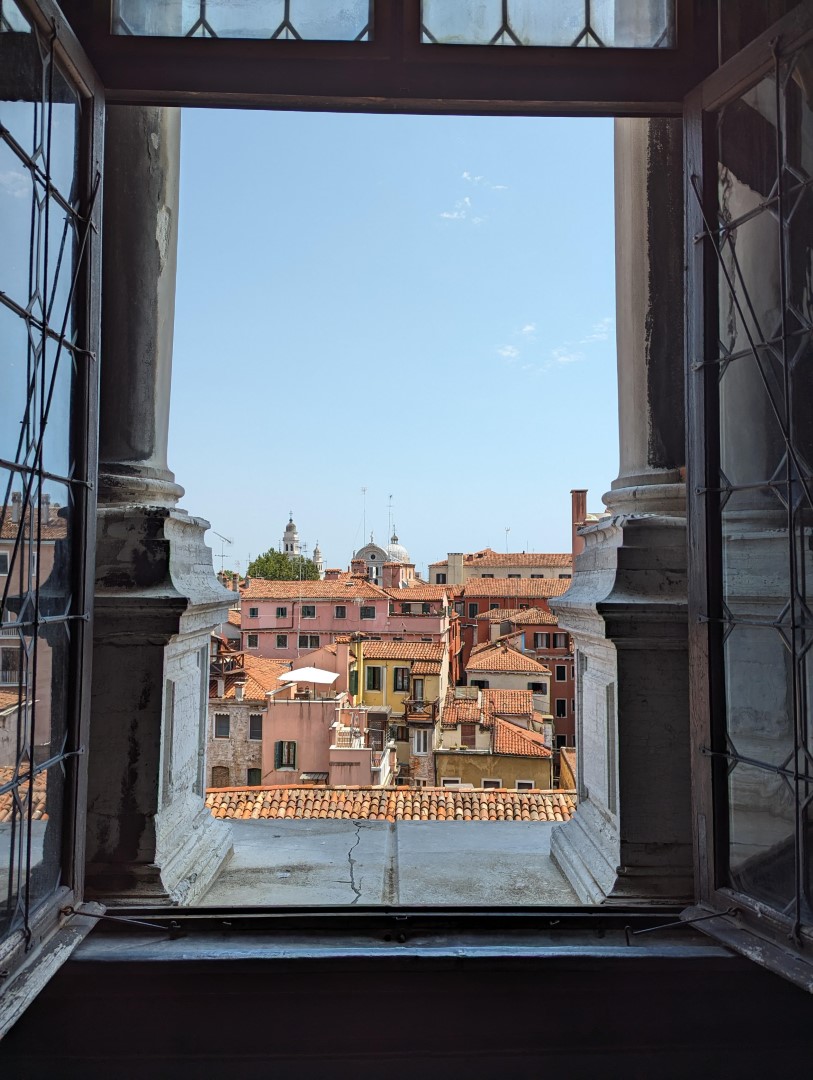
The Palace’s artworks are a billboard advertising the Republic’s power. It is overwhelming, and any visitor or dignitary from the 1500’s to now, leaves in awe of Venice’s impressive grandeur.


Other fun facts about Venice from history- lover Aurora:
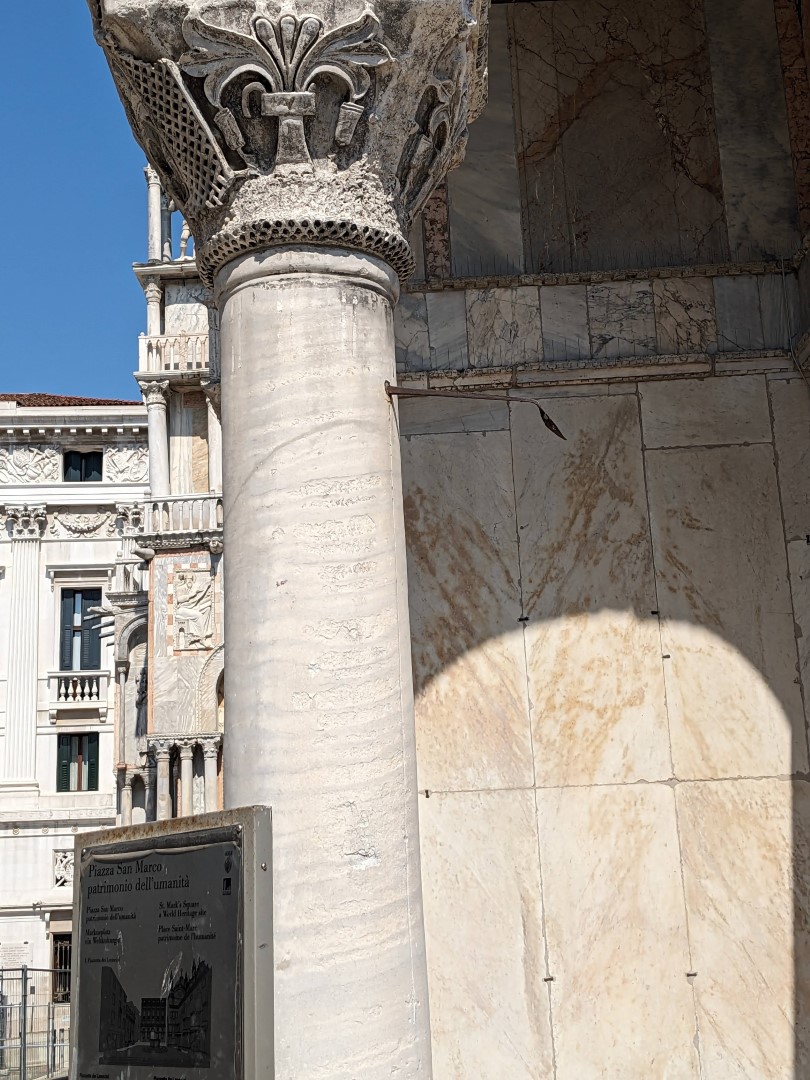
There’s a spoon embedded in one of the pillars at the front of St.Mark’s Basilica. This was wedged in there as a makeshift sundial by the builders before the nearby clock was constructed so they could keep an eye on the time.
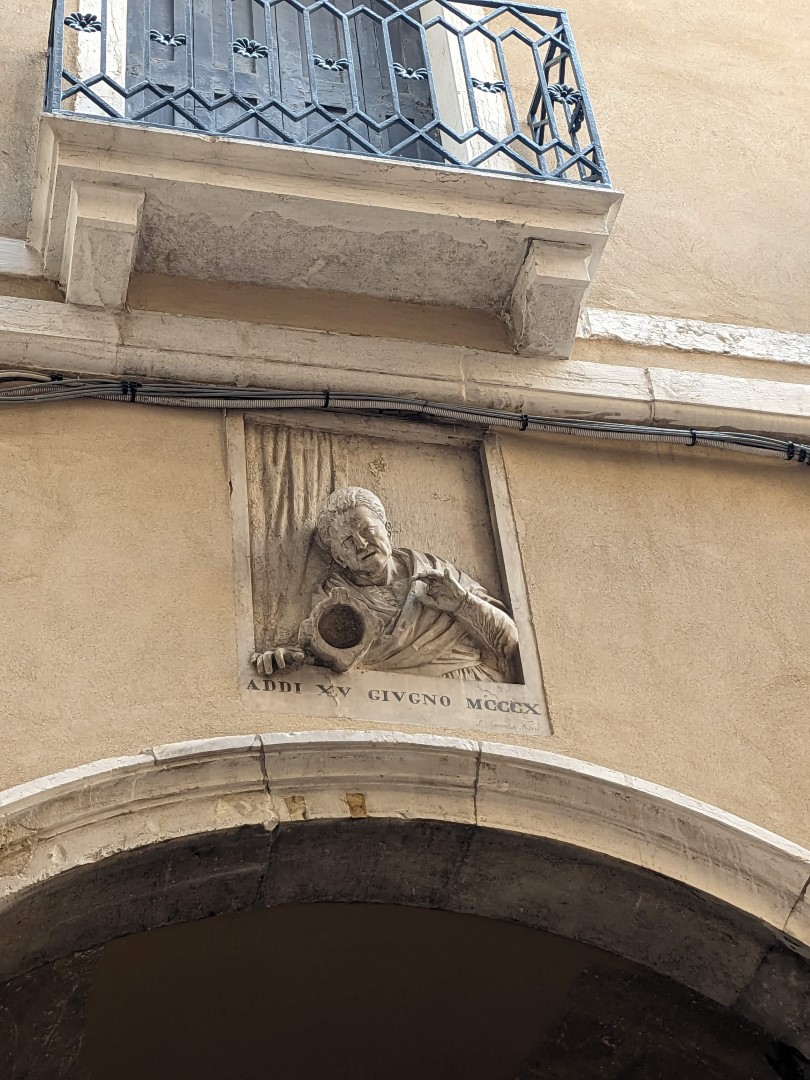
Aurora also pointed out a statue of a woman with a mortar that looks down from behind the Torre dell’Orologio, above the arch of the Sottoportego del Cappello Nero. On June 15, 1310, the ducal throne was to be overthrown by a band of revolutionaries, who were set to storm St. Mark’s squar, until commoner Giustina Rossi threw her mortar out her window and bopped one of the key conspirator’s on the scone, killing him. Her great, great, great (x 10) grandkids were happy with the outcome. Rent on her property , FIVE STEPS TO ONE OF THE MOST FAMOUS SQUARES ON THE PLANET, was fixed for all her descendants as a sign of the Doge’s gratitude for thwarting the revolt.
Cicchetti
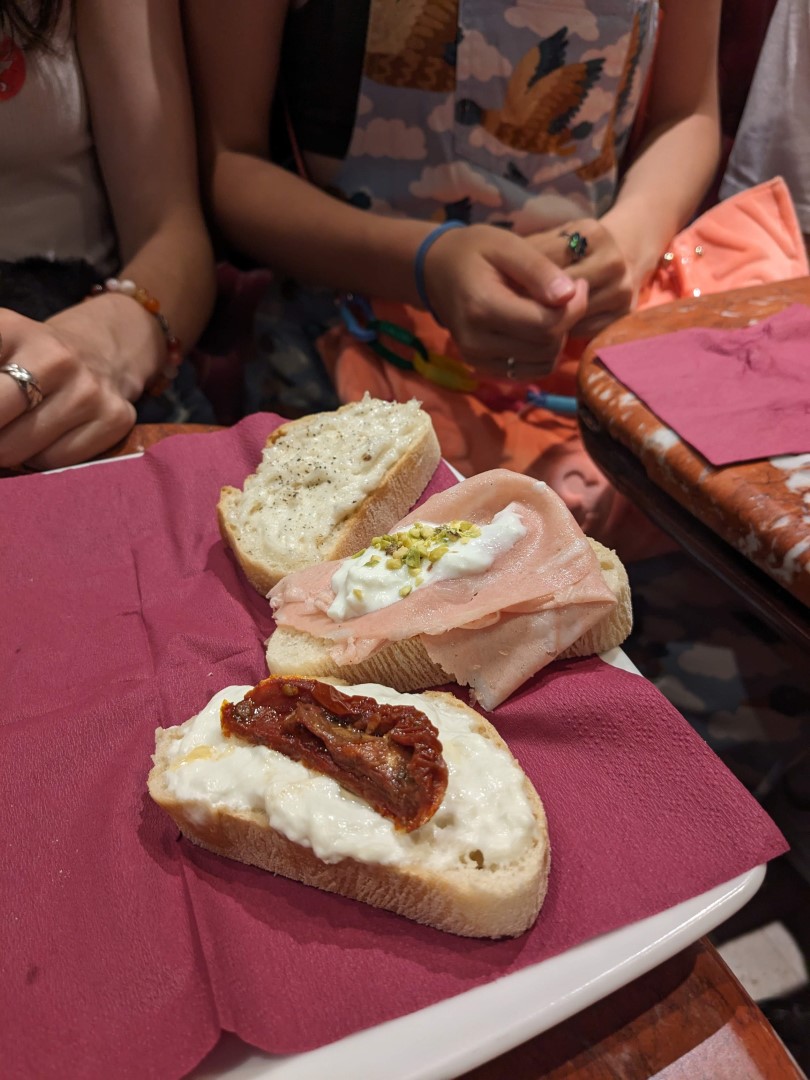
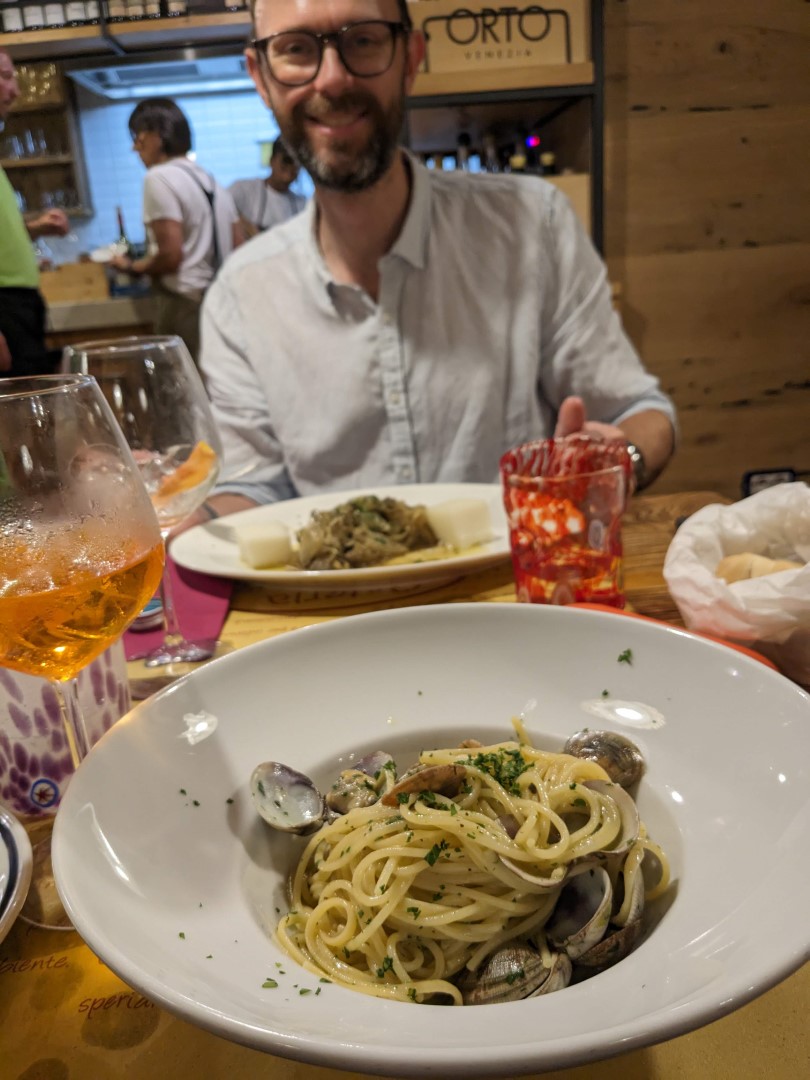
After our tour, we gathered at a Venetian bacaro, a wine bar that serves aperitives and “cicchetti”, Venetian finger food. Matteo at “Bacaro Da Me Pare” delivered platters of mortadella, prosciutto, baccala mantecata (cod paste), polenta, sarde in saor, slices of bread with stracciatella cheese and anchovy. With a tasty snack in one hand, and a spritz (with a base of Aperol, Campari, or the Venetian original, Select) in the other, it was wonderful to spend time catching up with the cugini.


San Zaccaria
We avoided most of Venice’s churches on this trip. My favourite, Santa Maria Gloriosa dei Frari, now required payment, and as much as I love Tiziano and Bellini’s work housed there, we decided not to re-visit.
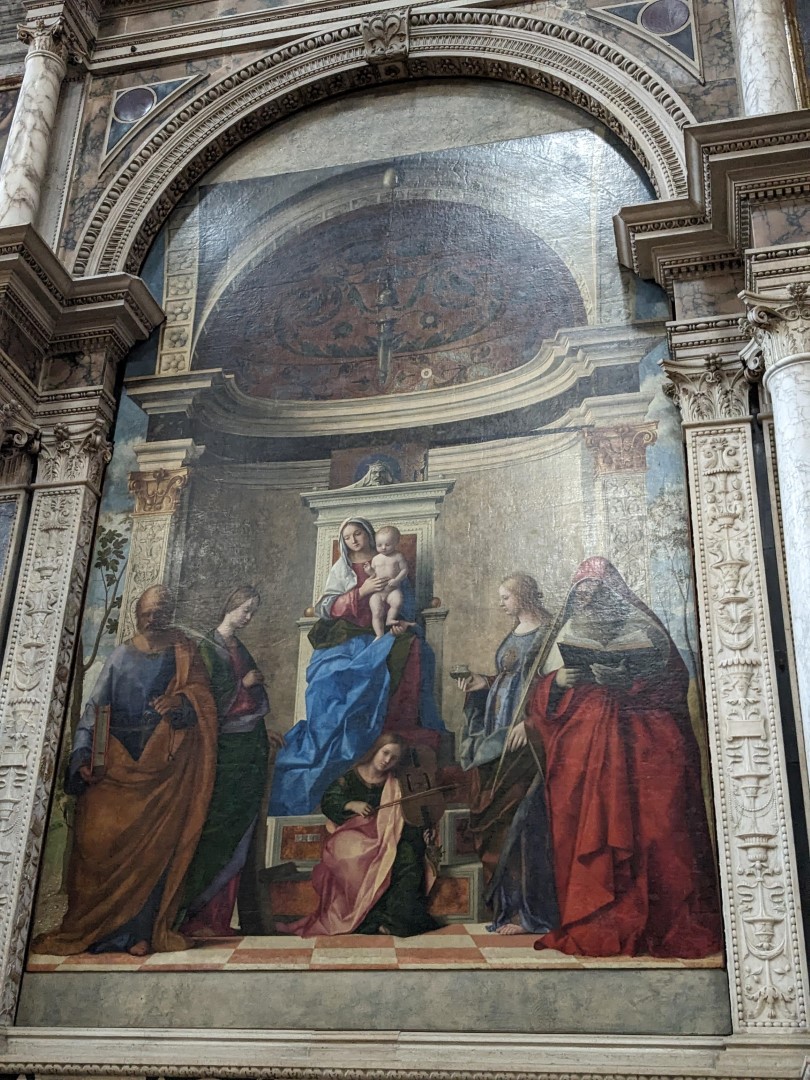
One church near our apartment in Castello (the largest of six “sestieri” or areas of Venice) that we were keen to check out was San Zaccaria. Built in the 9th century and then reworked and fancied up in the mid 1400’s, the inside is its own gallery; a riot of colourful artwork by various Renaisssance painters covering every wall. I had the chance to see another Bellini work, “Madonna and Child with Saints” from 1505. His intricate details, facial expressions, and bold colours are divine.


I love the stories surrounding this church. Next door is a Benedictine convent, once accommodating daughters of noble Venetian families. Many of these families could afford to marry off one, maybe two daughters, offering hefty dowries with each marriage. Daughter #3 wasn’t so lucky. Their parents couldn’t afford to buy another ticket in the marriage lottery, so they were sent off to the convent. These nuns were resentful. They wanted to party. They were known for their masked balls, scandalous gatherings, and strong “connections” to Venetian aristocracy. I’m guessing their lives weren’t all THAT grim.
The highlight of the year was a visit from the Doge every Easter Monday, who would receive a new hat, the “corno ducale”, handmade by the more crafty ladies in the crew.
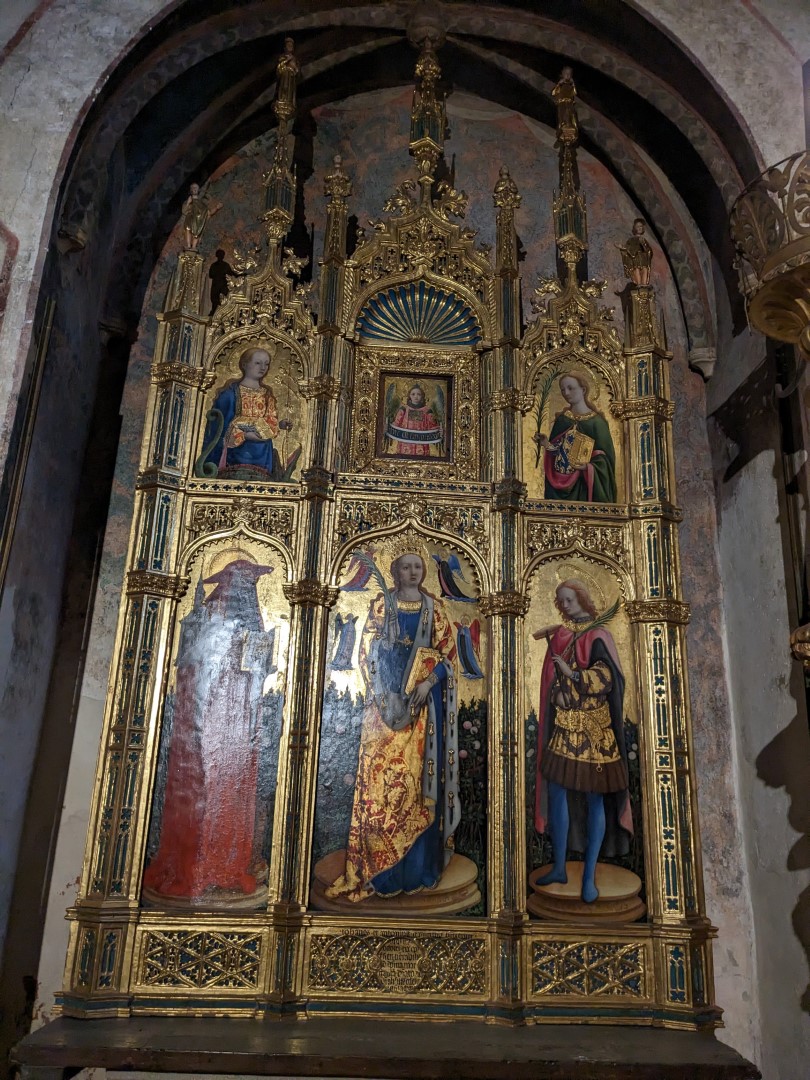
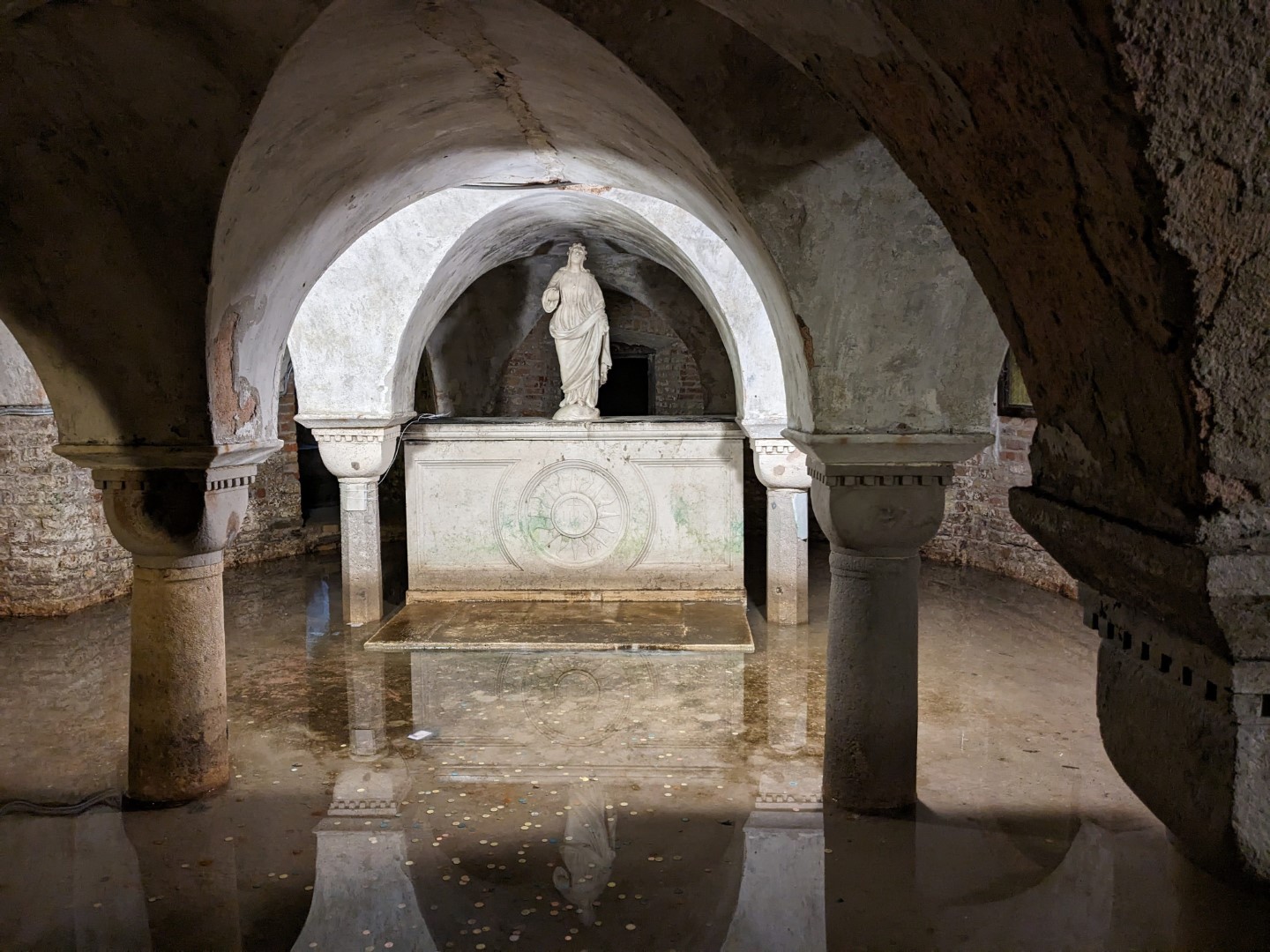
Enter a little museum to the right of the church (we were the only ones who seemed to know this was a thing as the place was deserted), and you’ll find more lush artwork, some currently being repaired, by Antonio Vivarini. The highlight lays beneath this, where a flooded crypt, below Venice’s water level, houses the relics of eight doges. Probably not the best idea to build a basement in Venice t.b.h., but the water-filled crypt gives the space a mysterious mirror-pool effect, and glistens with coin offerings.
Arsenale
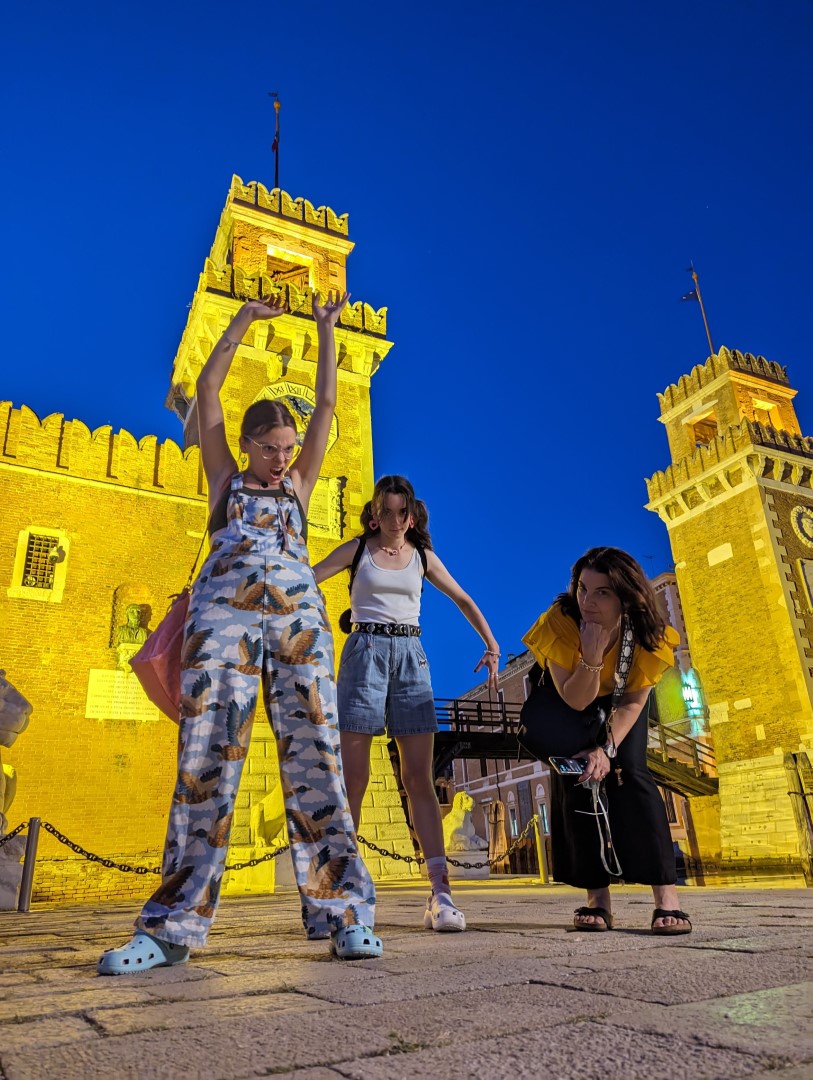
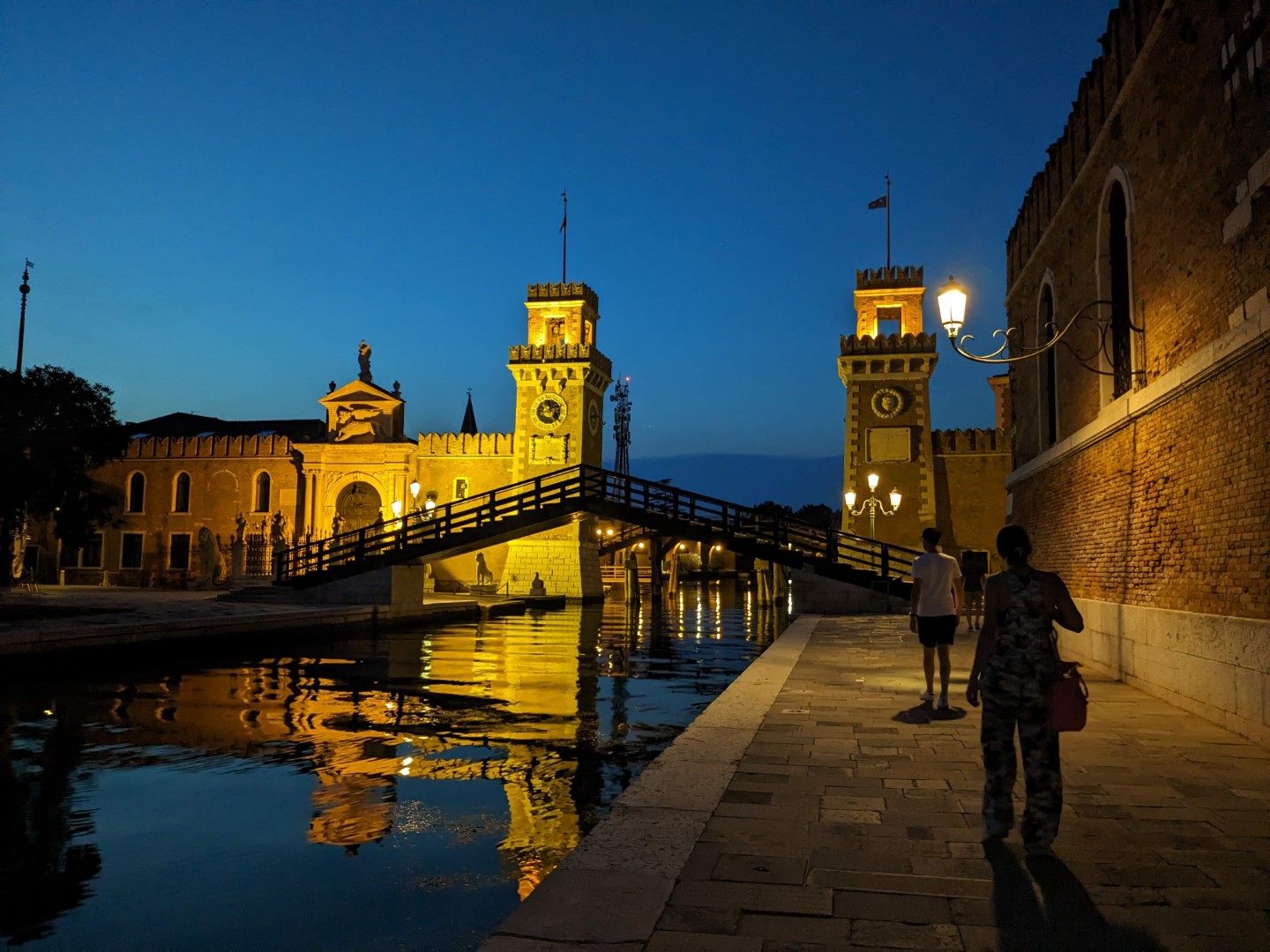
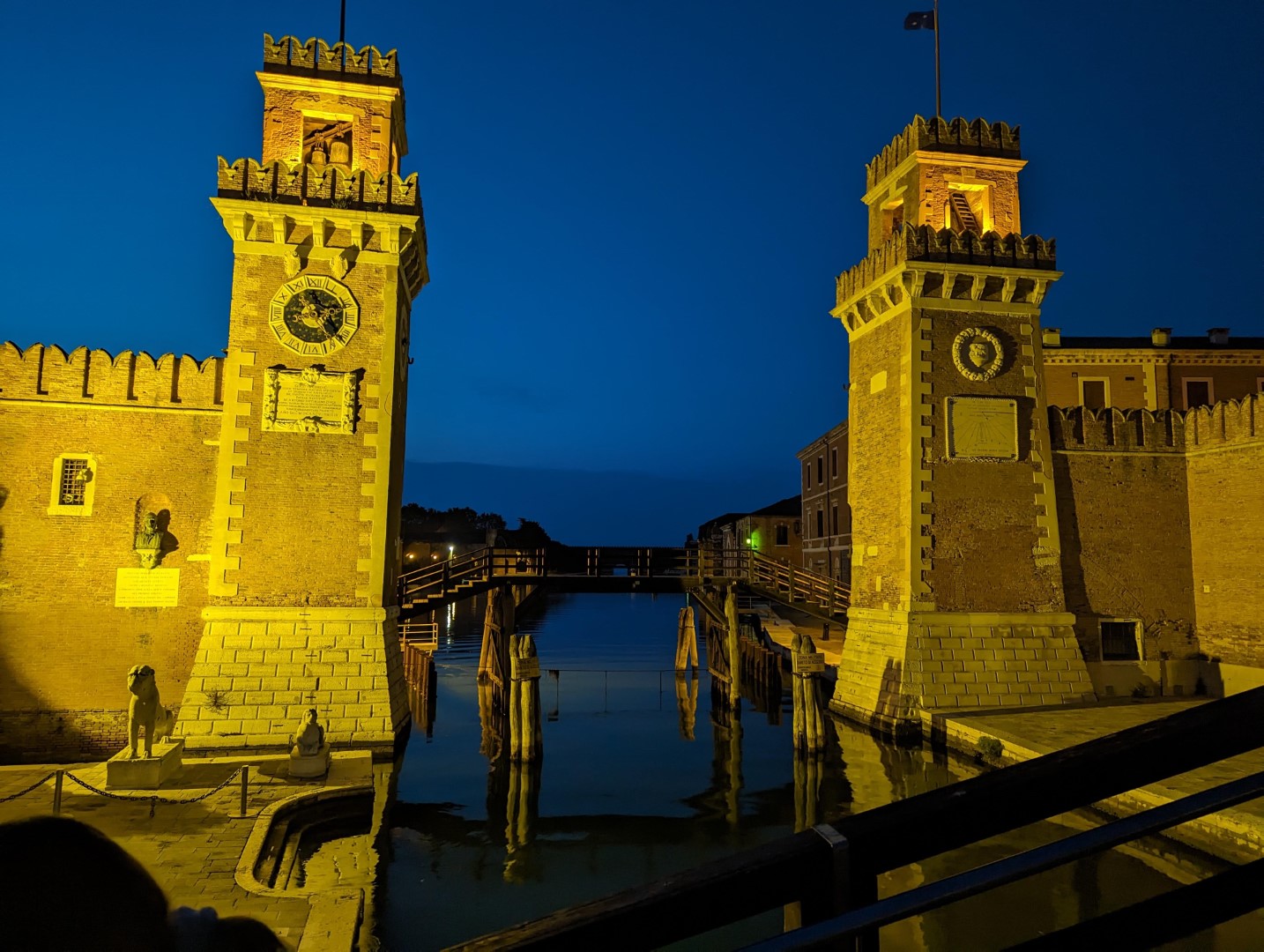
We wandered past the great shipyards that built and housed the Venetian fleet, founded in the 12th century and expanded up to the 16th. It was said to be the most splendid shipyard in the world, where Venetian galleys were built and repaired by 16,000 workers, paving the way for assembly-line manufacturing processes across Europe.
San Michele
We had seen the walled cemetery-island of San Michele from Fondamente Nuove many times, and wondered what was hidden behind those walls. We have visited some incredible cemeteries on our travels, such as La Recoleta in Buenos Aires (“One of the most beautiful cemeteries in the world” according to the BBC and CNN); and Croatia’s architecturally designed Varazdin Cemetery, which is more lush city-park than cemetery.
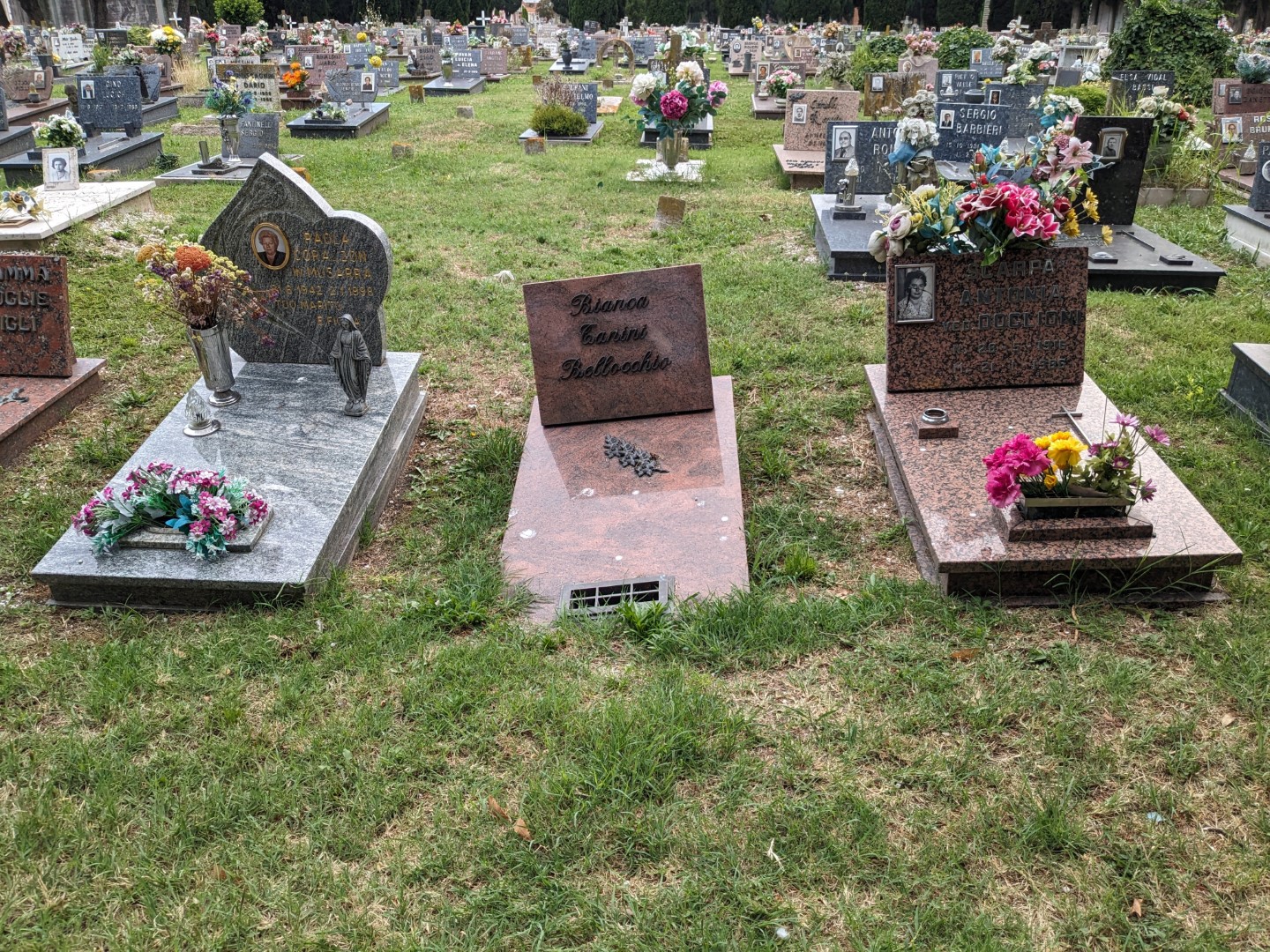

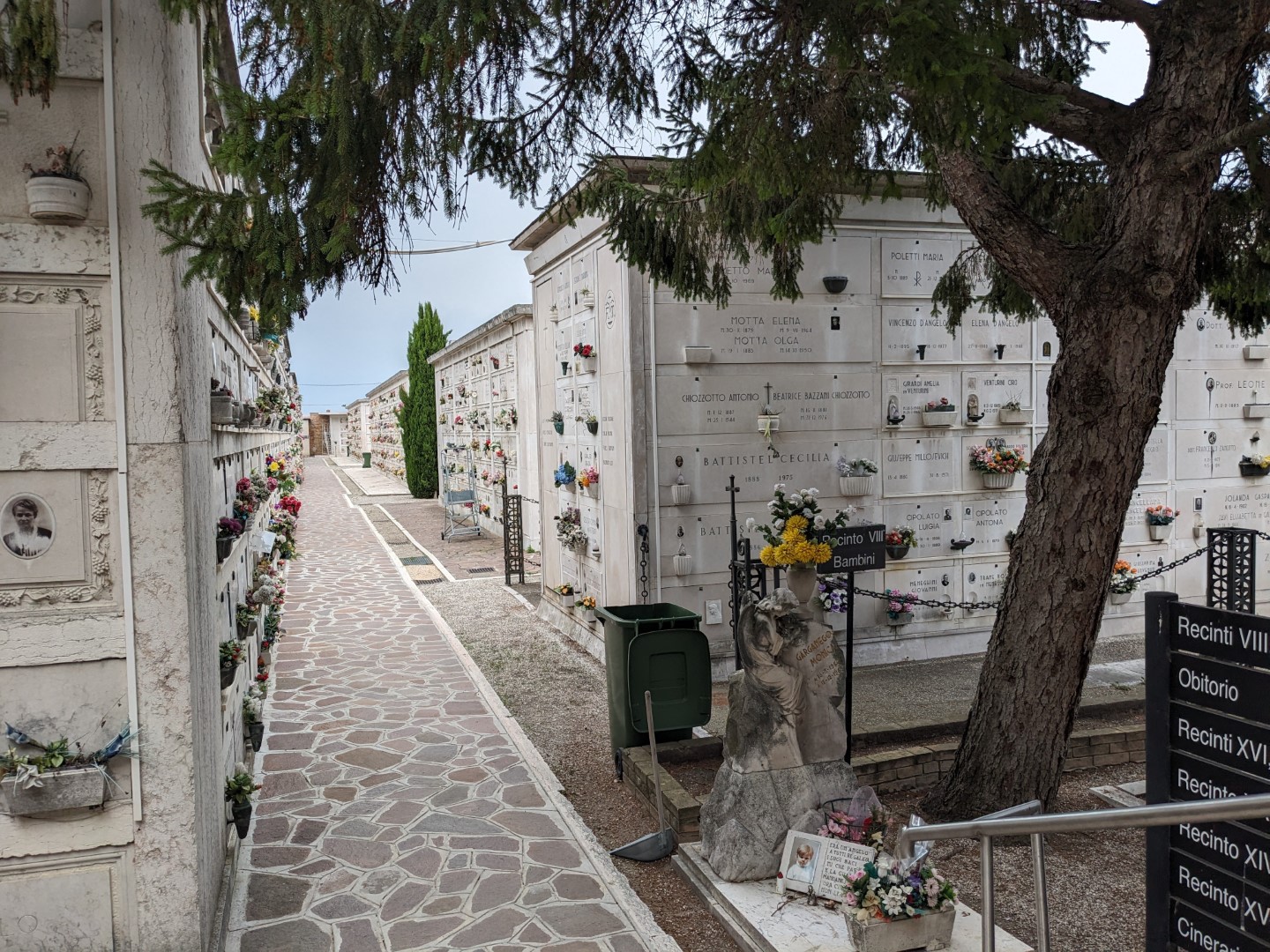
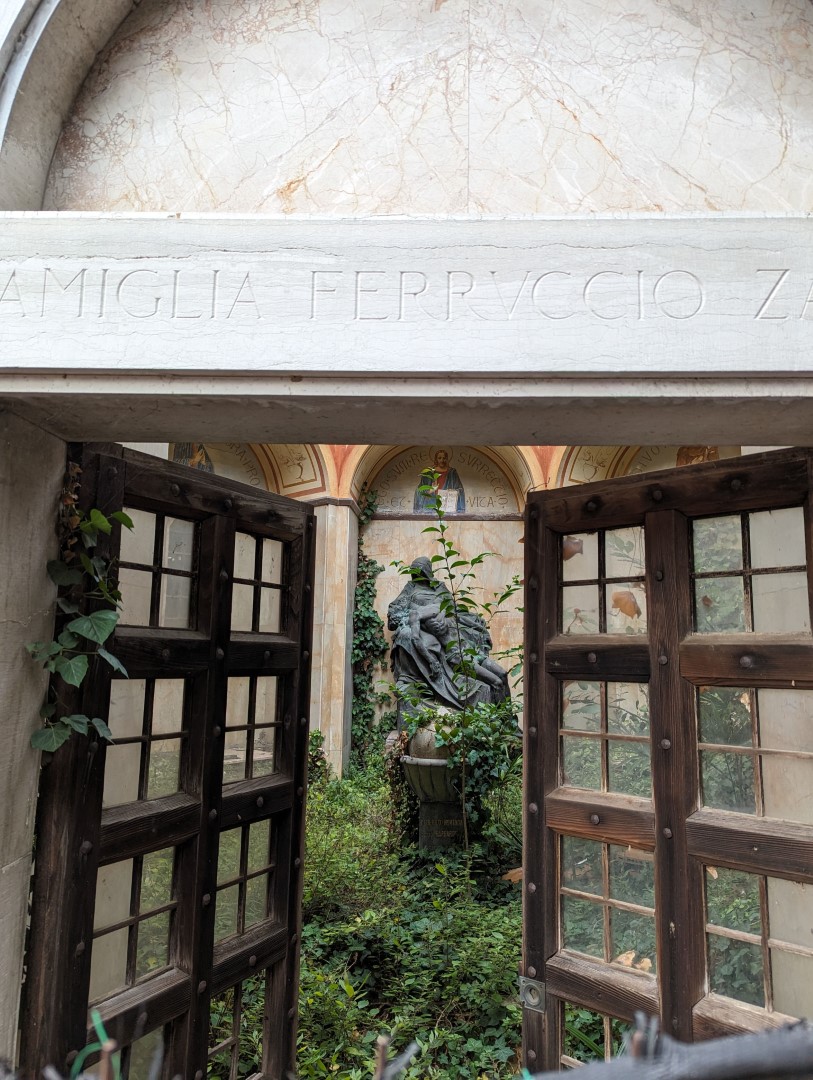

We assumed (wrongly) that the resting place of Venetians who have lived in a place saturated in a wealth of religious beauty, would have a glorious resting place of art and splendour.
No. The rambling cemetery was a depressing, neglected mess. Faded artificial flowers adorned sunken gravestones. Statues are broken. Due to a lack of space, many bodies get dug up and moved after ten years to an ossuary island. Even private chapels of wealthier families were boarded over, with ivy and plants growing wild around statues of Mary and melted candles.
We could have spent the two hours nibbling cicchetti instead. Lesson learnt.
More pics? We have hundreds!
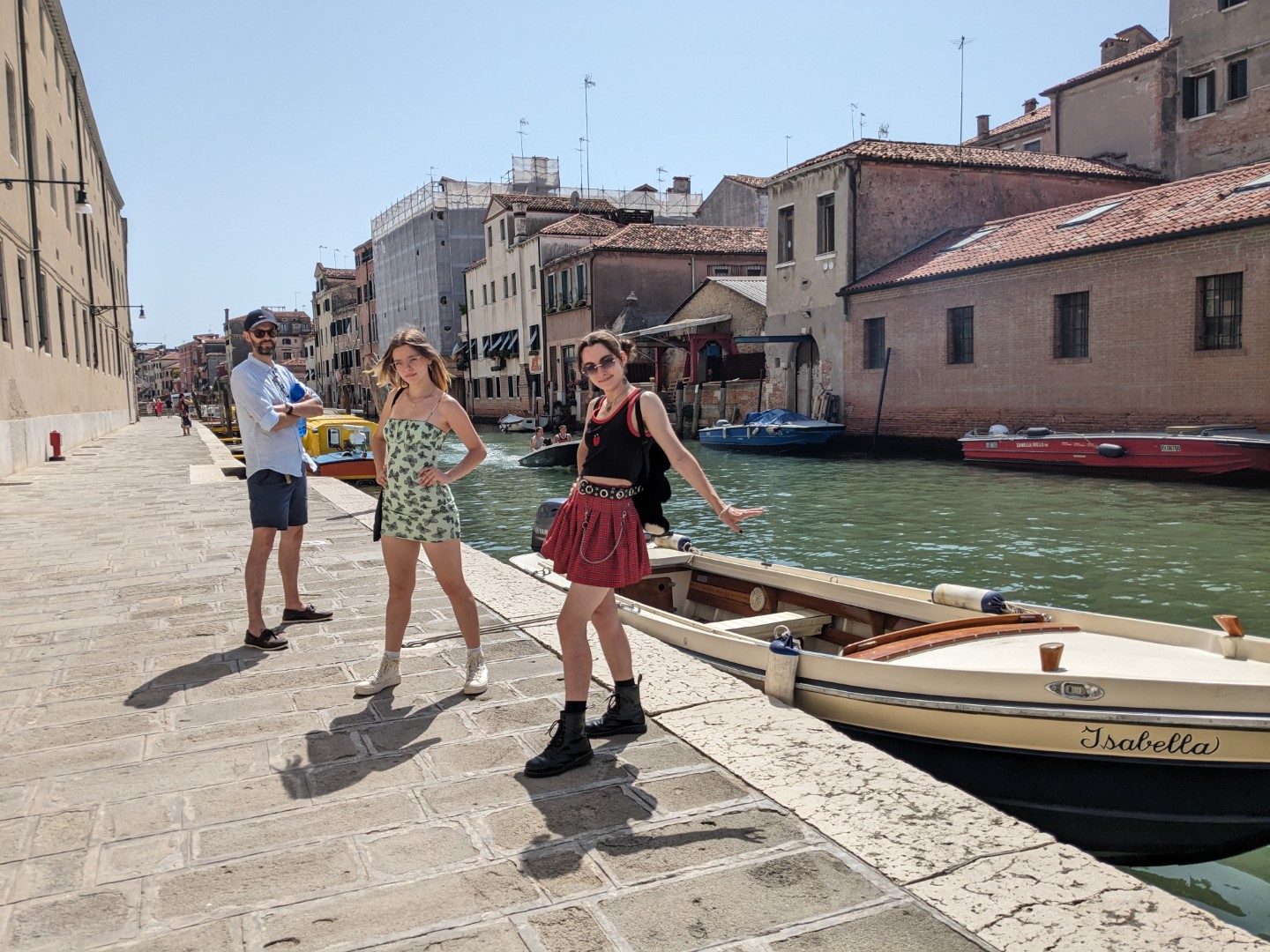
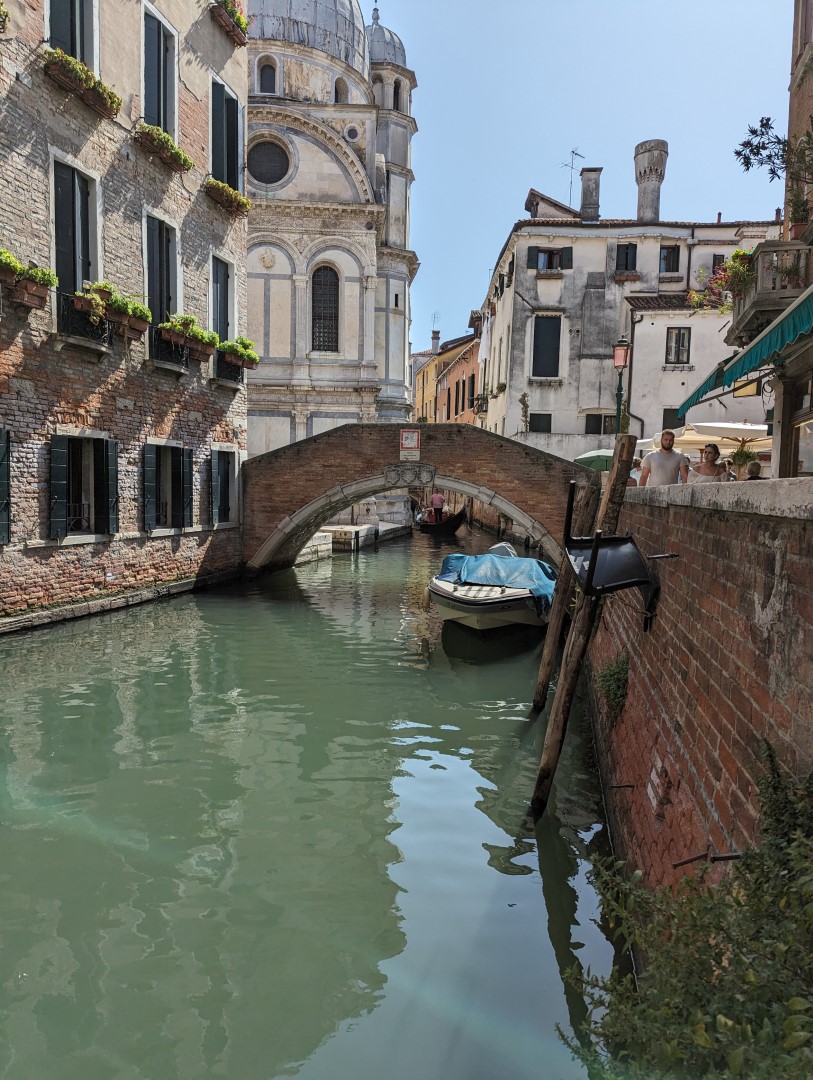
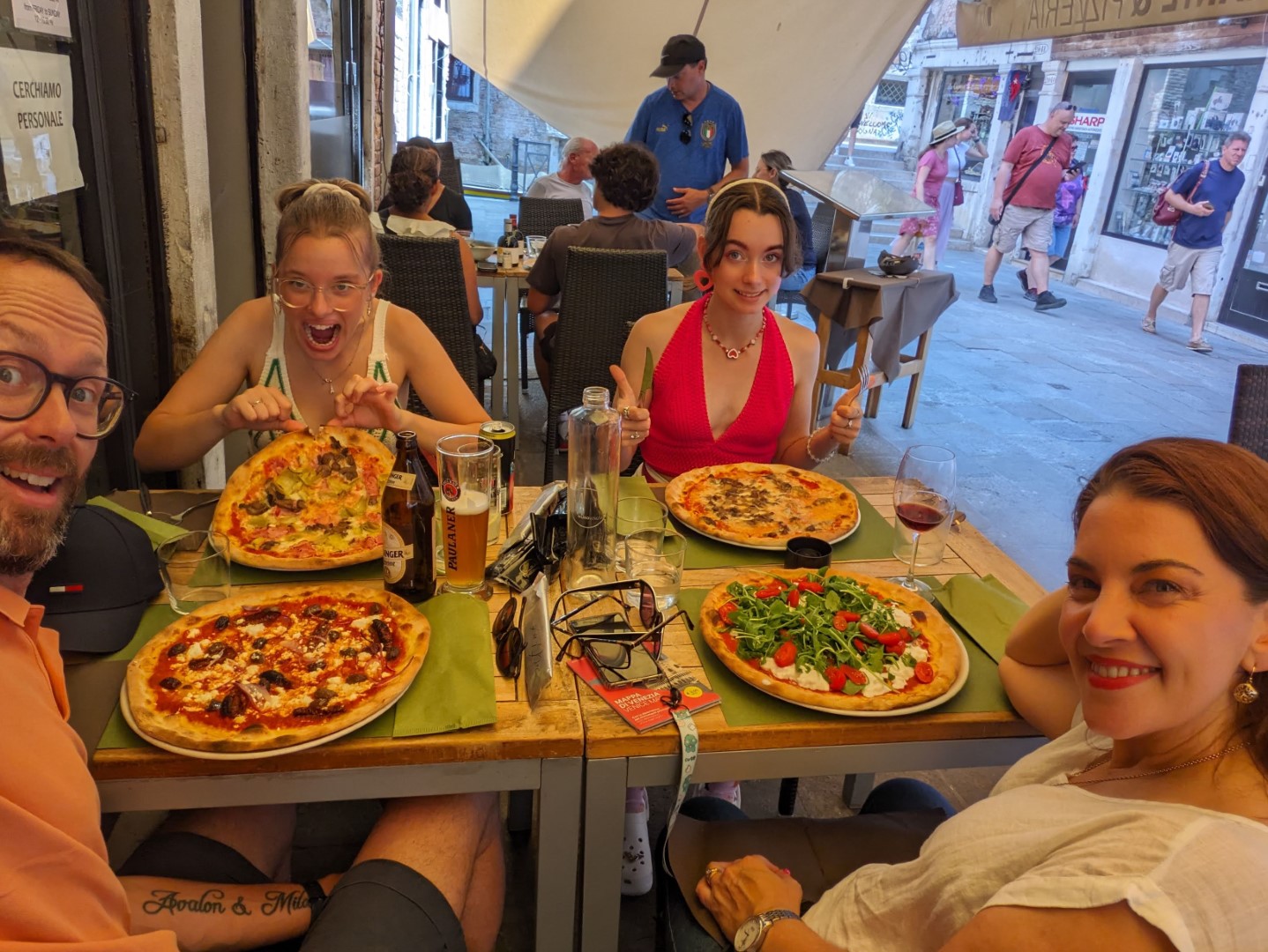
Other Venetian highlights: supermarket lunches eaten on the docks, gelato, drinking Spritzes that cost a third of the Aus-price, pizza, Cam helping dudes carry wine barrels over bridges, and hours and hours of wandering in wonder.





 The Token Traveller